
menu

Benefits of Inverter Technology in Hartford – Cut Your Energy Bills by Up to 40%

Discover how variable speed compressor benefits and inverter HVAC energy efficiency slash cooling costs while keeping Hartford homes comfortable through humid summers and unpredictable spring weather.

Slider Image 1
Slider Image 2
Slider Image 3
Slider Image 4
Slider Image 5
Slider Image 7
Slider Image 8
Slider Image 9
Slider Image 10
Slider Image 11

Why Hartford Homeowners Are Switching to Inverter Air Conditioners

Hartford's climate creates expensive comfort problems. You face sweltering July humidity that pushes cooling systems to their limit, then mild October days where traditional HVAC units cycle on and off constantly. This stop-start operation wastes electricity and drives up Eversource bills.

Traditional single-speed compressors run at 100% capacity regardless of need. They blast cold air until the thermostat clicks off, then restart minutes later when the temperature drifts. Each restart spike pulls massive amperage. You pay for that electrical surge every single cycle.

The advantages of inverter air conditioners eliminate this waste. Variable speed compressor benefits show up immediately on your utility statement. Instead of brutal on-off cycling, the compressor adjusts output continuously from 20% to 100% capacity. When your West End home needs gentle cooling on a 68-degree morning, the system runs at low speed. When afternoon humidity climbs near the Connecticut River, output increases smoothly.

Hartford's temperature swings between seasons make inverter technology power savings even more dramatic. You are not paying to restart a compressor 30 times per day. The system matches your actual cooling load in real time. Families in Asylum Hill and Downtown report 30-40% lower summer electric bills after switching from conventional systems.

The pros of inverter heat pumps extend beyond summer. These systems provide efficient heating during Connecticut's moderate winters, maintaining comfort without the electrical penalties of traditional equipment.

Why Hartford Homeowners Are Switching to Inverter Air Conditioners
How Variable Speed Technology Transforms HVAC Performance

How Variable Speed Technology Transforms HVAC Performance

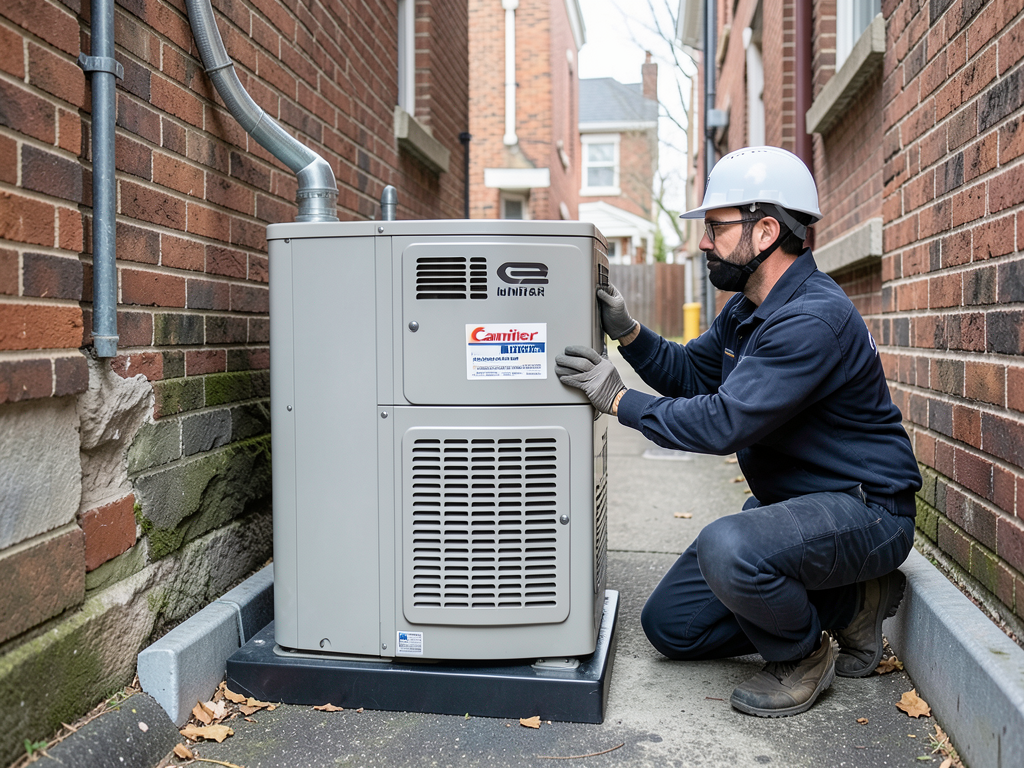
Inverter HVAC energy efficiency starts with the compressor motor. Traditional motors operate digitally, either full blast or completely off. Inverter-driven compressors use DC power and frequency modulation to vary speed in precise increments. Think of it like cruise control for your cooling system.

The outdoor condensing unit contains sensors that monitor discharge pressure, suction pressure, and refrigerant temperature. The control board receives real-time data from your indoor thermostat. When cooling demand drops, the variable frequency drive reduces compressor RPM. When demand increases, RPM climbs proportionally.

This modulation happens within seconds. Your system never shuts down completely during occupied hours. The compressor maintains baseline operation at 20-30% capacity, ready to ramp up smoothly when needed. You avoid inrush current spikes that occur when compressors restart from zero.

The refrigerant circuit benefits too. Constant circulation prevents slugging and oil migration issues common in cycling systems. The evaporator coil maintains steadier temperatures, improving dehumidification in Hartford's humid conditions. You get better moisture removal without overcooling.

Liberty HVAC Hartford installs inverter systems with attention to refrigerant charge precision. Inverter compressors require exact charge levels to optimize efficiency across the operating range. We use digital manifolds and subcooling calculations specific to variable speed equipment. Our technicians verify amperage draw at multiple speed points during commissioning.

The indoor air handler runs continuously at variable fan speeds. This constant air movement eliminates hot spots and temperature stratification. Your second floor stays comfortable without blasting the first floor with excess cold air.

What Happens When You Upgrade to Inverter Technology

Benefits of Inverter Technology in Hartford – Cut Your Energy Bills by Up to 40%
01

Load Calculation and Equipment Selection

We start with Manual J load calculations specific to your Hartford home. Your existing system likely runs oversized, which kills efficiency. We measure window orientations, insulation values, and infiltration rates. Hartford's mixed-humid climate requires precise moisture load calculations. We select inverter equipment that covers your actual peak load without excessive capacity. Proper sizing determines whether you achieve the full energy efficiency potential of variable speed technology.
02

Installation and Refrigerant Optimization

Our team installs the inverter condensing unit with vibration isolation appropriate for variable speed operation. We run communication wiring between indoor and outdoor units so the control boards synchronize properly. Refrigerant charging uses superheat and subcooling measurements at multiple compressor speeds. We verify voltage supply meets inverter drive requirements, checking forharmonics that interfere with variable frequency drives. Line set insulation gets upgraded to handle the wider temperature range of modulating refrigerant flow.
03

Calibration and Performance Testing

We program your thermostat communication settings and verify the system modulates through its full speed range. Amperage readings confirm efficient operation from minimum to maximum capacity. We measure supply air temperature drop and airflow at different speeds to document performance. You receive documentation showing energy consumption at various load conditions. We establish baseline data so you can track actual savings against your previous Eversource statements. Follow-up visits verify refrigerant charge stability after initial break-in.

Why Hartford Residents Choose Liberty HVAC for Inverter Upgrades

Variable speed systems require different expertise than conventional HVAC. Many contractors install inverter equipment using the same methods as single-speed units. You end up with expensive technology that performs no better than what you replaced.

Liberty HVAC Hartford trains specifically on inverter diagnostics and optimization. We understand how electronic expansion valves interact with variable speed compressors. Our technicians use oscilloscopes to verify clean power delivery to inverter drives. We catch voltage issues that cause nuisance faults and premature component failure.

Hartford's building stock ranges from Victorian homes near Elizabeth Park to modern construction in the South End. Each building type presents unique challenges for inverter system installation. Historic homes often have inadequate electrical service for high-efficiency equipment. We coordinate service upgrades and ensure proper grounding for sensitive electronics.

Local utility rates make efficiency improvements financially attractive. Eversource charges time-of-use rates during peak summer hours. Inverter technology reduces your consumption exactly when electricity costs the most. We help you calculate payback periods based on actual Hartford rate structures.

We source equipment from manufacturers with proven inverter reliability. Some brands use proprietary refrigerants that complicate future service. Others lack parts availability for control boards and inverter drives. Our preferred equipment lines have local distributor support and nationwide service networks.

Hartford's mechanical codes require proper permitting for HVAC replacements. We handle plan submissions and coordinate inspections with the city building department. You receive documentation that satisfies local compliance requirements and protects your home value.

What to Expect During Your Inverter System Upgrade

Installation Timeline and Scheduling

Most inverter system installations complete in one to two days depending on your home configuration. We schedule around your availability and Hartford's unpredictable spring weather. Our team arrives with all equipment and materials to avoid delays. You maintain cooling throughout the installation using temporary equipment if needed. We coordinate electrical service upgrades in advance if your panel lacks capacity for inverter technology. Complex installations involving ductwork modifications or zoning systems may extend to three days. We provide clear timeline expectations during your initial consultation so you can plan accordingly.

Detailed System Assessment and Recommendations

Your consultation includes infrared scanning to identify air leakage and insulation gaps that compromise efficiency. We test your existing ductwork for leakage using calibrated flow hoods and pressure measurements. Hartford homes built before 1980 often have undersized return air systems that limit inverter performance. Our assessment identifies these restrictions before equipment selection. You receive written recommendations explaining why specific inverter models match your home's characteristics. We compare projected energy savings against your recent utility bills. Our proposals include equipment specifications, efficiency ratings, and expected performance ranges for Hartford's climate conditions.

Performance and Comfort Improvements

You notice quieter operation immediately. Inverter systems eliminate the startup roar of conventional compressors cycling on. Temperature swings between rooms disappear as continuous air circulation balances your home. Humidity control improves dramatically during Hartford's muggy summer months. Your system removes moisture effectively without creating the clammy feeling of overcooled air. Energy monitoring shows real-time consumption so you see efficiency gains daily. Most Hartford families report 30-50% lower cooling costs through the first summer. Heating efficiency during mild Connecticut winters adds further savings. Your home maintains consistent comfort without the temperature roller coaster of cycling equipment.

Maintenance and Long-Term Support

Inverter systems require specialized maintenance beyond standard HVAC service. We check refrigerant charge at multiple compressor speeds to verify optimization across the operating range. Control board diagnostics identify communication errors between indoor and outdoor units. Our technicians monitor inverter drive performance and test for electrical issues that cause failures. You receive priority scheduling for seasonal tune-ups timed to Hartford's climate transitions. We maintain detailed service records tracking your system's performance over time. This documentation helps identify developing issues before they cause breakdowns. Liberty HVAC Hartford stocks common inverter components including control boards and expansion valves. You avoid extended wait times for parts during failures.

Frequently Asked Questions

You Have Questions,
We Have Answers

What are the benefits of inverter technology? +

Inverter technology adjusts compressor speed to match your cooling or heating needs, eliminating the constant on-off cycling of traditional systems. This delivers 30-50% lower energy bills, which matters in Hartford where we face humid summers and cold winters. You get precise temperature control without the temperature swings. The system runs quieter, lasts longer due to less mechanical stress, and maintains consistent comfort during those humid July days when older units struggle. Inverter systems also reduce wear on electrical components, which means fewer emergency repair calls during peak seasons.

What is the disadvantage of an inverter? +

The main disadvantage is higher upfront cost. Inverter systems typically cost 20-30% more than standard units. The electronic components are also more sensitive to power surges, which can happen during Hartford's summer thunderstorms. You may need a surge protector for added protection. Repairs can be more expensive if specialized circuit boards fail, though this happens less often than compressor burnout in older systems. The complexity requires trained technicians familiar with inverter diagnostics. However, the energy savings usually offset the initial investment within 3-5 years for most Hartford homes.

What should you not plug into an inverter? +

Avoid plugging high-surge appliances into power inverters. This includes laser printers, which draw massive startup power, and large power tools like table saws or air compressors. Microwave ovens demand consistent high wattage that can overload smaller inverters. Medical equipment like CPAP machines needs pure sine wave inverters, not modified versions. Space heaters and hair dryers pull too much continuous current. Older refrigerators with standard compressors have high startup surges. Stick to electronics, phone chargers, laptops, LED lights, and small fans. Always check your inverter's continuous and peak wattage ratings before connecting any device.

What are the benefits of digital inverter technology? +

Digital inverter technology uses microprocessors to control compressor speed with extreme precision. This creates even tighter temperature control than standard inverter systems, keeping your Hartford home within 0.5 degrees of your setpoint. You get faster cooling during those 90-degree summer days and more efficient heating when temperatures drop below freezing. Digital inverters adjust in smaller increments, reducing energy waste. They communicate with smart thermostats better, giving you remote control and usage data. The technology detects system issues early, preventing breakdowns. Noise levels drop even further because the compressor operates at optimal speeds without hunting for the right setting.

Can an inverter run a fridge? +

Yes, but size matters. A refrigerator with inverter technology built into its compressor runs efficiently on standard power and uses 30-40% less energy than older models. If you mean running a standard fridge on a power inverter during outages, you need at least a 1500-2000 watt inverter to handle startup surge. Older fridges pull 3-5 times their running wattage on startup. In Hartford, where ice storms can knock out power, a proper inverter setup with battery backup keeps food safe. Modern inverter refrigerators have gentler startup curves, making them easier to run on backup power systems.

Is it worth getting an inverter? +

For Hartford homeowners, yes. Our climate demands both cooling and heating, which means your HVAC runs heavily 8-9 months yearly. Inverter technology pays back faster when you use it year-round. You will see 30-50% energy savings compared to single-stage systems. The comfort improvement alone matters during our humid summers when standard units cycle off and humidity creeps back up. Your system lasts longer with less mechanical stress. Utility rates continue rising, making efficiency more valuable. If you plan to stay in your home 5+ years, the return on investment makes sense for most Hartford properties.

What are the problems with inverters? +

Inverter systems can face electronic control board failures, though less common than compressor failure in standard units. Power surges from Hartford's summer storms can damage sensitive circuits if you lack surge protection. Some homeowners report error codes that require diagnostic tools to interpret. Refrigerant leaks still happen and cost the same to fix. Finding technicians trained in inverter diagnostics can be harder than for standard systems. The systems require proper sizing, oversized inverter units lose efficiency benefits. Initial cost remains a barrier for some budgets. Most problems stem from improper installation rather than the technology itself.

What is the 3 minute rule for AC? +

The 3-minute rule protects your AC compressor from damage. After your system shuts off, refrigerant pressure needs time to equalize between the high and low sides. Starting too soon forces the compressor to work against high pressure, causing mechanical stress and potential failure. Quality thermostats have this delay built in. Inverter systems handle this better because they ramp up gradually rather than starting at full power. In Hartford's climate where your AC runs frequently during summer, this protection prevents premature compressor burnout. Never manually override the delay. Patience saves you from expensive emergency repairs.

Which one is better, AC or inverter? +

This compares two different things. Standard AC uses fixed-speed compressors that run full blast then shut off. Inverter AC uses variable-speed technology that adjusts output continuously. Inverter systems are objectively better for efficiency, comfort, and longevity. You get 30-50% energy savings, precise temperature control, and quieter operation. The question is like asking whether automatic or manual transmission is better. For Hartford's variable climate with hot, humid summers and cold winters, inverter technology delivers measurable benefits. Standard AC costs less upfront but costs more to operate over its lifetime. Choose based on your budget and how long you plan to stay.

What appliances should not be used with an inverter? +

Keep these appliances off power inverters during outages. Electric water heaters draw too much continuous power. Sump pumps have high startup surges that trip inverters. Window AC units without inverter compressors pull massive startup current. Washing machines and electric dryers exceed most inverter capacities. Older refrigerators and freezers with standard compressors can overload systems. Space heaters and electric ovens draw constant high wattage. Coffee makers and toasters spike power usage. In Hartford homes during storm outages, prioritize LED lights, phone chargers, laptops, and modern inverter-equipped appliances that run efficiently on backup power systems.

How Hartford's Humid Climate Maximizes Inverter Technology Benefits

Hartford averages 50 days per year with relative humidity above 80%. This moisture load creates expensive comfort challenges. Traditional air conditioners remove humidity only when running at full capacity. They cool your home too quickly, then shut off before extracting enough moisture. You feel clammy even at 72 degrees. Inverter systems solve this problem through continuous operation. The compressor runs at low speed for extended periods, allowing the evaporator coil to condense moisture steadily. Your home stays drier without excessive cooling. This matters particularly in Hartford neighborhoods near the Connecticut River where morning humidity lingers.

Local building codes and utility programs increasingly favor high-efficiency equipment. Eversource offers rebates for inverter heat pumps meeting specific efficiency thresholds. Liberty HVAC Hartford handles rebate applications and ensures your equipment qualifies for available incentives. We maintain relationships with local inspectors who understand inverter technology requirements. Hartford's mixed building stock requires experience adapting modern systems to older homes. Our technicians regularly work with the challenges of knob-and-tube wiring, limited attic access, and undersized electrical services common in pre-war construction. You get equipment upgrades that respect your home's character while delivering modern performance.
HVAC Services in The Hartford Area

Liberty HVAC Hartford proudly serves the entire Hartford area and surrounding communities. We're a local business dedicated to our neighbors' comfort. Use the map below to pinpoint our location or to confirm that your home or business is within our primary service area. We are always ready to dispatch a professional, certified technician directly to your door for any heating or cooling need you may have, ensuring prompt and convenient service every single time.

Address:
Liberty HVAC Hartford, 15 N Main St, Hartford, CT, 06107

Additional Services We Offer

Our news updates

Latest Articles & News from The Blogs

Emergency Kitchen Exhaust and HVAC Repair for Downtown Hartford Restaurants When your kitchen exhaust system fails during a dinner rush…

Emergency Kitchen Exhaust and HVAC Repair for Downtown Hartford Restaurants

Emergency Kitchen Exhaust and HVAC Repair for Downtown Hartford Restaurants When your kitchen exhaust system fails during a dinner rush…

Why High Velocity Air Conditioning is the Best Choice for Historic Wethersfield Homes

Expert High Velocity AC Installation in Wethersfield, CT Historic Wethersfield homes built before 1950 often lack the space for traditional…

Keeping Your West End Mini Split Running Smoothly with a Professional Deep Clean

Professional Mini Split Cleaning in West End Hartford, CT Your mini split works hard to keep your West End home…

Contact Us

Find out how much inverter technology can cut your cooling costs. Call Liberty HVAC Hartford at (959) 203-9992 for a free assessment. We provide honest recommendations based on your home's specific needs and realistic savings projections.