
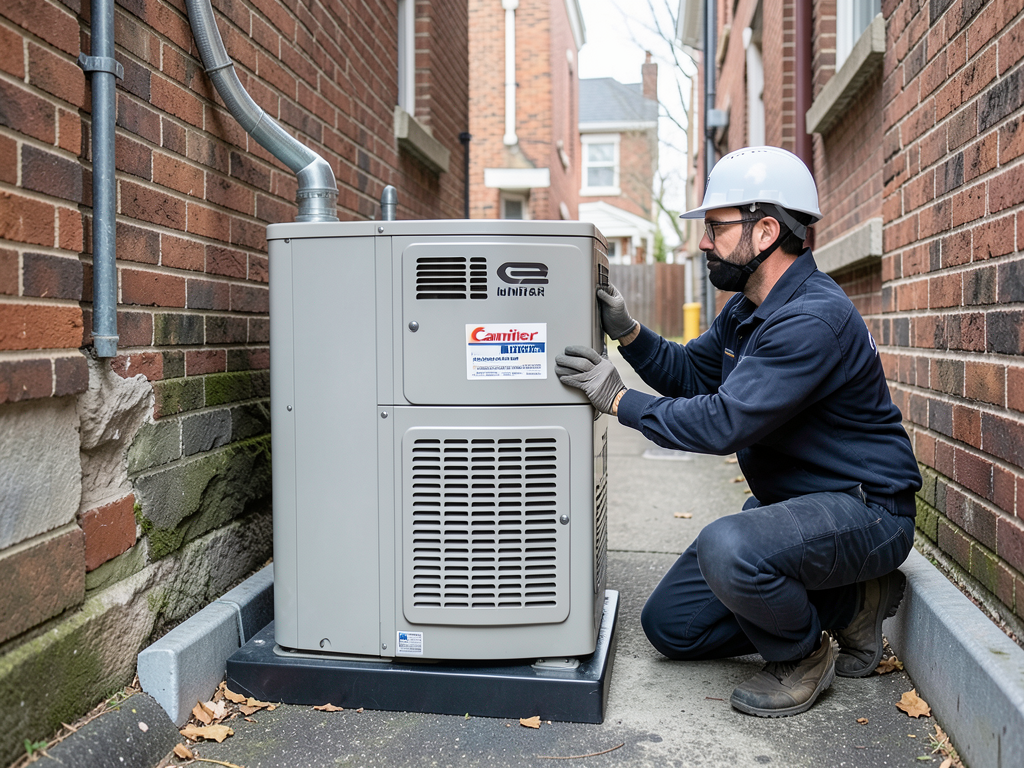
Why Sound Levels Matter in Hartford’s Blue Hills Neighborhood
Living in Blue Hills means homes sit closer together than in suburban areas. A loud outdoor AC unit can disrupt neighbors and create tension in tight-knit communities. Hartford’s humid summers make air conditioning essential, but choosing a quiet system ensures comfort without noise complaints. HVAC Hartford.
Sound levels are measured in decibels (dB). A typical conversation registers around 60 dB, while a quiet library sits at 40 dB. Many modern HVAC units operate between 50-70 dB, but the quietest models can drop below 50 dB—about as loud as a refrigerator. For narrow lots where units sit just feet from bedroom windows, these differences matter.
Connecticut’s humid continental climate affects how AC systems operate. High humidity forces compressors to run longer cycles, which can increase noise over time. Choosing a system with variable-speed technology helps manage both humidity and sound levels by running at lower speeds most of the time. Compressor Failure Repair.
Call (959) 203-9992 today to schedule your quiet HVAC consultation before summer heat arrives.
Top Quietest AC Models for Hartford Homes
Several manufacturers now offer ultra-quiet outdoor units specifically designed for dense neighborhoods. These models use advanced compressor technology, sound-dampening materials, and aerodynamic fan designs to minimize operational noise.
The quietest central air conditioners for 2026 include models from Carrier, Lennox, and Trane that operate at 50-55 dB when running at normal capacity. These units use variable-speed compressors that adjust cooling output based on demand rather than cycling on and off at full power.
Sound blankets wrapped around compressors can reduce noise by 2-5 dB, while vibration isolation pads prevent the unit from transferring vibrations to the home’s foundation. These additions are especially valuable in Blue Hills where homes often share property lines.
ENERGY STAR certified units typically run quieter than standard models because they use more efficient motors and better insulation. The Connecticut Energy Efficiency Fund offers rebates for qualifying high-efficiency equipment, making quiet systems more affordable for Hartford residents. High Efficiency AC Options for Luxury Homes in Glastonbury.
Technical Features That Reduce AC Noise
Variable-Speed Compressors vs. Single-Stage
Single-stage compressors operate at 100% capacity whenever running, creating the loudest possible noise level. Variable-speed compressors adjust their output from 40% to 100% based on cooling needs, dramatically reducing sound levels during mild weather.
Two-stage compressors offer a middle ground, running at about 65% capacity for most cooling needs and only ramping up to full power during extreme heat. This design reduces the number of full-power cycles and associated noise.
Modern inverter-driven compressors can modulate output continuously rather than in stages. This technology, borrowed from Japanese mini-split systems, provides the quietest operation and best humidity control for Connecticut’s climate.
Sound Blankets and Vibration Isolators
Sound blankets are specialized insulation wrapped around the compressor compartment. Made from acoustic foam and vinyl, these blankets absorb vibration and block sound transmission through the cabinet.
Vibration isolation pads placed under the unit prevent metal-to-concrete contact that amplifies noise. These rubber or composite pads also protect against frost heave in Hartford’s freeze-thaw cycles.
Fan blade design significantly impacts noise levels. Modern units use swept-wing blade designs that move air more efficiently at lower speeds, reducing the high-pitched whine common in older units. The Best Energy Efficient Boilers for Hartford Homes with Old Radiators.
Installation Strategies for Narrow Lots
Proper installation can make a significant difference in system noise. Strategic placement away from bedroom windows and shared walls reduces impact on neighbors and household members.
Sound barriers between units and property lines can reduce perceived noise by 5-10 dB. These barriers work best when they block the direct line of sight between the unit and living spaces.
Connecticut’s building code requires minimum clearances around outdoor equipment for safety and maintenance access. In Blue Hills’ narrow lots, creative placement becomes essential to meet code while minimizing noise impact.
Routine maintenance prevents noise increases over time. Dirty condenser coils force compressors to work harder, creating more vibration and noise. Hartford’s pollen season can clog outdoor units quickly, making spring cleaning essential.
Local Case Study: Quiet Installations in Hartford
A recent installation in the Blue Hills area demonstrates how proper equipment selection and placement can solve noise concerns. The homeowner chose a Carrier Infinity system with Greenspeed intelligence, which operates at just 51 dB in normal mode.
The unit sits on vibration isolation pads and features a sound blanket around the compressor. Strategic placement behind a decorative fence blocks direct sound paths to neighboring properties while maintaining required clearances.
Post-installation testing showed noise levels of 48 dB at the property line, well below the threshold for neighbor complaints. The system also achieved 20% better efficiency than the previous unit, reducing energy costs.
Frequently Asked Questions
How quiet is a quiet AC unit?
The quietest central air conditioners operate between 50-55 dB, comparable to a normal conversation or quiet dishwasher. Ultra-quiet models can drop below 50 dB, approaching the sound level of a library whisper.
Do sound blankets really work?
Yes, sound blankets can reduce compressor noise by 2-5 dB, which is noticeable to the human ear. They work best when combined with other noise-reduction strategies like vibration isolation and proper fan blade design.
Will a quiet unit cost more?
Quiet units typically cost 10-15% more than standard models due to advanced compressor technology and sound-dampening features. However, Connecticut energy rebates and the improved efficiency of these units often offset the initial price difference.
Can I add sound blankets to my existing unit?
Sound blankets can be retrofitted to many existing units, reducing noise by several decibels. However, the improvement may be limited compared to a new variable-speed system designed for quiet operation.
How do I know if my unit is too loud?
If you can hear your AC unit from inside your home with windows closed, or if neighbors have mentioned the noise, your system may be too loud. A professional sound level test can measure actual decibel levels.
Choosing the Right System for Your Blue Hills Home
Selecting the quietest HVAC system requires balancing several factors: decibel ratings, efficiency, budget, and installation constraints. For Blue Hills’ narrow lots, noise reduction should be a top priority.
Variable-speed systems offer the best combination of quiet operation and humidity control for Connecticut’s climate. While they cost more upfront, the energy savings and comfort benefits often justify the investment.
Professional installation ensures your quiet system stays quiet. Poor installation can create vibration, airflow restrictions, and other issues that increase noise levels regardless of the unit’s design.
Regular maintenance preserves the quiet operation of your system. Annual tune-ups include cleaning coils, checking refrigerant levels, and tightening components that can create noise when loose.
Ready to enjoy quiet, efficient cooling? Call (959) 203-9992 now to schedule your free consultation and sound level assessment.
Understanding Hartford’s Noise Ordinances
Hartford County has specific noise regulations that affect HVAC installations. The city code limits outdoor equipment noise to 65 dB between 7 AM and 10 PM, and 55 dB during nighttime hours.
Blue Hills falls within a residential zone where these limits are strictly enforced. Violations can result in fines and mandatory equipment modifications, making it essential to choose compliant systems from the start.
Local inspectors measure noise levels at property lines using calibrated sound meters. Units exceeding limits must be modified with sound barriers or replaced with quieter models.
Connecticut’s DEEP (Department of Energy and Environmental Protection) also regulates refrigerant handling during installation and maintenance. Proper certification ensures both noise compliance and environmental protection. EPA refrigerant handling regulations.
Energy Efficiency and Noise Reduction Connection
High-efficiency HVAC systems tend to run quieter because they use better motors, improved insulation, and advanced control systems. The relationship between efficiency and noise reduction benefits Hartford homeowners.
SEER2 ratings (Seasonal Energy Efficiency Ratio 2) indicate cooling efficiency. Higher SEER2 ratings often correlate with quieter operation due to better compressor technology and insulation.
Connecticut’s Energize CT program offers rebates for high-efficiency equipment that meets specific noise and performance standards. These incentives make quiet, efficient systems more affordable for Blue Hills residents. Energize CT energy rebates.
Variable-speed systems achieve the highest efficiency ratings while maintaining quiet operation. They adjust output to match cooling needs precisely, avoiding the loud full-power cycles of single-stage units.
Maintenance Tips for Quiet Operation
Even the quietest system can become noisy without proper maintenance. Hartford’s humid climate and seasonal debris create specific challenges for outdoor units.
Clean condenser coils every spring to remove winter debris and ensure efficient heat transfer. Dirty coils force compressors to work harder, increasing both energy use and noise levels.
Check and tighten all mounting hardware annually. Loose components create rattling and vibration that amplifies through the unit’s cabinet and foundation.
Inspect sound blankets and vibration pads for damage. These components degrade over time, especially in Connecticut’s freeze-thaw cycles, reducing their noise-dampening effectiveness.
Clear vegetation at least 24 inches from the unit to ensure proper airflow. Restricted airflow forces the system to work harder and can create whistling sounds through louvers.
Comparing Decibel Levels to Real-World Sounds
Understanding decibel ratings helps homeowners make informed decisions. Here’s how common AC noise levels compare to familiar sounds:
| Sound Source | Decibel Level | Perceived Loudness |
|---|---|---|
| Quietest AC Units (2024) | 45-50 dB | Library whisper |
| Standard Quiet AC | 50-55 dB | Refrigerator hum |
| Normal Conversation | 60 dB | Normal speech |
| Busy Office | 70 dB | Background chatter |
| Vacuum Cleaner | 75 dB | Household noise |
A reduction of just 10 dB sounds approximately half as loud to the human ear. This means a 50 dB unit seems much quieter than a 60 dB unit, even though the numerical difference appears small.
Cost Considerations for Quiet Systems
Quiet HVAC systems typically cost 15-25% more than standard units. However, several factors can offset this premium for Hartford homeowners.
Connecticut energy rebates through Energize CT can provide $300-600 for qualifying high-efficiency systems. These rebates specifically target equipment that meets noise and efficiency standards.
Lower energy bills from efficient operation often recover the price difference within 3-5 years. Variable-speed systems can reduce cooling costs by 20-40% compared to single-stage units.
Avoiding neighbor complaints and potential fines represents another cost benefit. The expense of sound barriers or system modifications after installation often exceeds the initial premium for a quiet system.
Increased home value from high-quality HVAC equipment appeals to buyers in Blue Hills’ competitive market. Energy-efficient, quiet systems serve as selling points for environmentally conscious homeowners.
Installation Timeline and Process
Installing a new quiet HVAC system typically requires 1-2 days, depending on the complexity of the job and existing infrastructure.
Day 1 involves removing the old unit, preparing the installation site, and setting the new equipment. This includes placing vibration isolation pads and ensuring proper clearances for maintenance access.
Day 2 focuses on electrical connections, refrigerant charging, and system testing. Technicians verify noise levels at multiple distances to ensure compliance with local ordinances.
Post-installation cleanup and final inspections complete the process. Most Hartford homeowners can expect their new system to be operational within 48 hours of starting the installation.
Why Professional Installation Matters
Even the quietest HVAC unit can become a noise problem without proper installation. Professional technicians understand the nuances that affect sound levels.
Correct refrigerant charging is critical for quiet operation. Undercharged systems cause compressors to work harder, creating excess vibration and noise. Overcharged systems can damage compressors and create gurgling sounds.
Proper ductwork design ensures balanced airflow without whistling or rattling. Undersized ducts force air through too quickly, creating noise throughout the system.
Level mounting prevents vibration transfer to the home’s structure. Even slight tilting can cause compressors to operate noisily and reduce system efficiency.
Professional installation includes noise testing to verify compliance with Hartford’s ordinances. This testing identifies any issues before the system becomes operational.
Making Your Decision
Choosing the right quiet HVAC system for your Blue Hills home requires careful consideration of your specific needs, lot configuration, and budget.
Start by having a professional assess your home’s cooling requirements. Proper sizing ensures efficient operation without excessive noise from oversized equipment.
Consider your neighbors and property layout when selecting equipment. Homes with close property lines benefit most from ultra-quiet systems and strategic placement.
Factor in long-term costs beyond the initial purchase price. Energy savings, maintenance requirements, and potential rebates all affect the true cost of ownership.
Trust experienced local professionals who understand Hartford’s specific requirements and climate challenges. Local expertise ensures your system meets both performance and noise standards.
Take Action Today
Don’t wait until summer heat arrives to address your HVAC needs. Hartford’s busy season means longer wait times for installations and emergency repairs. Who to Call for Emergency Furnace Repair in Hartford in the Middle of the Night.
Early planning allows you to explore all options, compare quotes, and take advantage of available rebates. It also ensures your system is ready before the first heat wave hits.
Professional assessment can identify issues you might not notice, such as inadequate cooling capacity or excessive noise from your current system.
Investing in a quiet, efficient system now provides years of comfortable, trouble-free operation. The peace of mind from knowing your system won’t disturb neighbors is worth the effort.
Call (959) 203-9992 today to schedule your quiet HVAC consultation. Our Hartford experts will help you select the perfect system for your Blue Hills home.
You may also find this helpful. Comparing Mitsubishi and Daikin Mini Splits for Your Newington Home Office.
{
“@context”: “https://schema.org”,
“@type”: “BlogPosting”,
“headline”: “How to Choose a Quiet HVAC System for Your Narrow Lot in Blue Hills”,
“description”: “Discover how to select the quietest HVAC system for Blue Hills’ narrow lots. Compare decibel ratings, sound blankets, and installation strategies for Hartford’s close-knit neighborhoods.”,
“wordCount”: 2214,
“datePublished”: “2026-06-09T15:32:00.000Z”,
“dateModified”: “2026-06-09T15:32:00.000Z”,
“inLanguage”: “en-US”,
“mainEntityOfPage”: {
“@type”: “WebPage”,
“@id”: “https://libertyhvachartford.com”
},
“publisher”: {
“@type”: “LocalBusiness”,
“name”: “Liberty HVAC Hartford”,
“url”: “https://libertyhvachartford.com”
},
“author”: {
“@type”: “Organization”,
“name”: “Liberty HVAC Hartford”,
“url”: “https://libertyhvachartford.com”
},
“image”: {
“@type”: “ImageObject”,
“url”: “https://libertyhvachartford.com/wp-content/uploads/2026/03/how-to-choose-a-quiet-hvac-system-for-your-narrow-1.png”
}
}
{
“@context”: “https://schema.org”,
“@type”: “HVACBusiness”,
“name”: “Liberty HVAC Hartford”,
“url”: “https://libertyhvachartford.com”,
“address”: {
“@type”: “PostalAddress”,
“addressLocality”: “Hartford”
},
“areaServed”: {
“@type”: “City”,
“name”: “Hartford”
}
}
{
“@context”: “https://schema.org”,
“@type”: “FAQPage”,
“mainEntity”: [
{
“@type”: “Question”,
“name”: “How quiet is a quiet AC unit?”,
“acceptedAnswer”: {
“@type”: “Answer”,
“text”: “The quietest central air conditioners operate between 50-55 dB, comparable to a normal conversation or quiet dishwasher. Ultra-quiet models can drop below 50 dB, approaching the sound level of a library whisper.”
}
},
{
“@type”: “Question”,
“name”: “Do sound blankets really work?”,
“acceptedAnswer”: {
“@type”: “Answer”,
“text”: “Yes, sound blankets can reduce compressor noise by 2-5 dB, which is noticeable to the human ear. They work best when combined with other noise-reduction strategies like vibration isolation and proper fan blade design.”
}
},
{
“@type”: “Question”,
“name”: “Will a quiet unit cost more?”,
“acceptedAnswer”: {
“@type”: “Answer”,
“text”: “Quiet units typically cost 10-15% more than standard models due to advanced compressor technology and sound-dampening features. However, Connecticut energy rebates and the improved efficiency of these units often offset the initial price difference.”
}
},
{
“@type”: “Question”,
“name”: “Can I add sound blankets to my existing unit?”,
“acceptedAnswer”: {
“@type”: “Answer”,
“text”: “Sound blankets can be retrofitted to many existing units, reducing noise by several decibels. However, the improvement may be limited compared to a new variable-speed system designed for quiet operation.”
}
},
{
“@type”: “Question”,
“name”: “How do I know if my unit is too loud?”,
“acceptedAnswer”: {
“@type”: “Answer”,
“text”: “If you can hear your AC unit from inside your home with windows closed, or if neighbors have mentioned the noise, your system may be too loud. A professional sound level test can measure actual decibel levels.”
}
}
]
}
{
“@context”: “https://schema.org”,
“@type”: “BreadcrumbList”,
“itemListElement”: [
{
“@type”: “ListItem”,
“position”: 1,
“name”: “Home”,
“item”: “https://libertyhvachartford.com”
},
{
“@type”: “ListItem”,
“position”: 2,
“name”: “Blog”,
“item”: “https://libertyhvachartford.com/blog”
},
{
“@type”: “ListItem”,
“position”: 3,
“name”: “How to Choose a Quiet HVAC System for Your Narrow Lot in Blue Hills”
}
]
}
{
“@context”: “https://schema.org”,
“@type”: “Service”,
“serviceType”: “HVAC”,
“provider”: {
“@type”: “LocalBusiness”,
“name”: “Liberty HVAC Hartford”,
“url”: “https://libertyhvachartford.com”
},
“areaServed”: {
“@type”: “City”,
“name”: “Hartford”
},
“description”: “Discover how to select the quietest HVAC system for Blue Hills’ narrow lots. Compare decibel ratings, sound blankets, and installation strategies for Hartford’s close-knit neighborhoods.”
}