
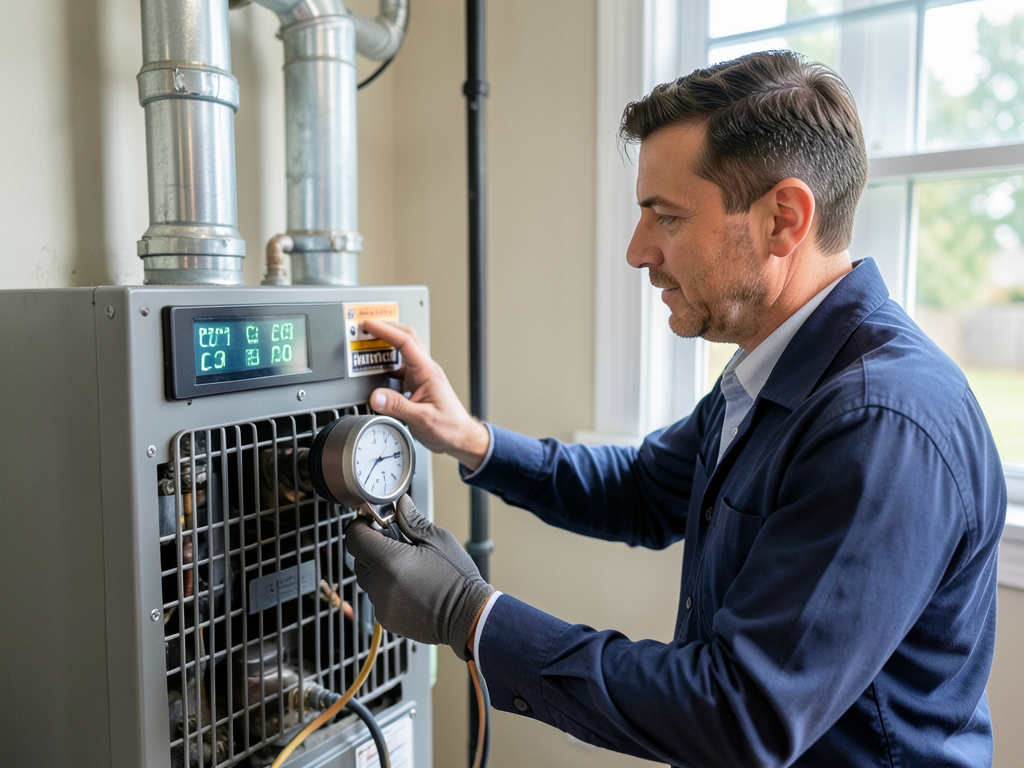
Signs Your Furnace Could Be Leaking Carbon Monoxide into Your Clay Arsenal Home
If you’re experiencing headaches, dizziness, or flu-like symptoms that worsen when you’re home, your furnace might be leaking carbon monoxide. This colorless, odorless gas can build up silently in your Clay Arsenal home, especially during Hartford’s freezing winters when your heating system runs constantly. Here’s what to watch for and what to do immediately. Who to Call for Emergency Furnace Repair in Hartford in the Middle of the Night.
Immediate Safety Protocol: What to do if you suspect Carbon Monoxide
Carbon monoxide poisoning requires immediate action. If you notice any warning signs or feel unwell at home, follow these steps:
- Get Fresh Air Immediately
Open windows and doors, then leave the house. Don’t wait to investigate the source.
- Call 911
Report a possible carbon monoxide emergency. Hartford Fire Department has specialized CO detection equipment. EPA Carbon Monoxide Safety Guide.
- Turn Off Your Furnace
Locate your furnace’s power switch or circuit breaker and shut it down.. Read more about Troubleshooting a Furnace Pilot Light That Keeps Going Out in Berlin.
- Call for Emergency HVAC Service
Contact Liberty HVAC at (959) 203-9992 for immediate inspection and repair.
- Seek Medical Attention
Even mild symptoms require evaluation. CO poisoning can cause lasting damage.
Physical Symptoms of Carbon Monoxide Poisoning (The ‘Silent Killer’)
Carbon monoxide prevents your blood from carrying oxygen, causing symptoms that mimic the flu without fever. These signs are especially dangerous because they develop gradually:
- Persistent headaches – Often described as dull and pressure-like
- Dizziness and confusion – Difficulty concentrating or remembering
- Nausea and vomiting – Stomach upset that comes and goes
- Weakness and fatigue – Feeling unusually tired or exhausted
- Shortness of breath – Especially during mild activity
- Blurred vision – Difficulty focusing your eyes
- Loss of consciousness – In severe cases
Pay attention if multiple family members experience these symptoms simultaneously, if pets seem lethargic, or if symptoms improve when you leave home. During Hartford winters, people often mistake CO poisoning for seasonal illnesses, but CO symptoms typically worsen indoors and improve outdoors. HVAC Hartford.
5 Visible Signs Your Furnace is Leaking Carbon Monoxide
Beyond physical symptoms, your furnace may show warning signs of carbon monoxide production. Here are five critical indicators to check:
- Yellow or flickering pilot light
Healthy gas furnaces produce a steady blue flame. A yellow, orange, or flickering flame indicates incomplete combustion, producing carbon monoxide. This is often called a “lazy flame” and signals your burner needs immediate service. - Soot or brownish-yellow stains around the furnace
Carbon buildup appears as dark streaks or stains near the burner area, on the front panel, or around vent connections. This soot results from incomplete fuel burning and indicates your system isn’t operating efficiently. - Excessive moisture on windows or walls
High humidity levels inside your home, especially condensation on windows, can indicate your furnace isn’t venting properly. When combustion gases can’t escape, they release moisture that condenses on cold surfaces. - Rusted or corroded flue pipes
Check the vent pipe that carries exhaust gases outside. Rust, holes, or separated joints mean dangerous gases could be leaking into your living space instead of exiting properly. - Stale or stuffy air
If your home feels unusually stuffy or has a persistent burning smell, your furnace might not be cycling air properly. This can indicate blocked vents or heat exchanger problems.
The Role of the Heat Exchanger
The heat exchanger is the heart of your furnace’s safety system. This metal chamber separates the combustion process from your home’s air. When it cracks, carbon monoxide escapes into your ductwork.
Heat exchangers fail for several reasons common in Hartford’s older homes:
- Thermal stress – Repeated heating and cooling cycles cause metal fatigue
- Corrosion – Hartford’s humid summers and wet winters accelerate rust formation
- Age – Most heat exchangers last 15-20 years; many Clay Arsenal homes have original equipment
- Restricted airflow – Dirty filters or blocked vents cause overheating
Heat exchanger cracks often start small but grow larger with use. They’re invisible to the naked eye without specialized inspection tools. A cracked heat exchanger requires immediate replacement – there’s no safe way to repair it.
Prevention: CO Detectors and Annual Inspections
Connecticut state law requires carbon monoxide detectors on every floor of your home, including the basement. Install them:. Read more about Switching from Oil to a Heat Pump in Connecticut – Costs and Local Rebates.
- Outside each sleeping area
- On every level of your home
- Near fuel-burning appliances (but at least 15 feet away)
Replace CO detector batteries annually and the units themselves every 5-7 years. Test them monthly by pressing the test button.
Annual furnace maintenance is your best protection against carbon monoxide leaks. During a tune-up, technicians perform:
- Heat exchanger inspection – Using mirrors, cameras, and sometimes chemical testing to detect cracks
- Combustion analysis – Measuring CO levels in exhaust gases
- Vent system check – Ensuring proper draft and no blockages
- Burner cleaning and adjustment – Optimizing the air-fuel mixture
- Safety control testing – Verifying all shut-off mechanisms work
Liberty HVAC recommends scheduling your annual inspection before November 1st each year. Hartford’s heating season typically runs from October through April, with your system working hardest in January and February when temperatures often drop below 20°F.
Understanding Hartford’s Specific Risks
Clay Arsenal’s mix of historic and mid-century homes presents unique challenges. Many houses built before 1980 have original furnaces with aging heat exchangers. The neighborhood’s proximity to the Park River flood zone also means some homes have elevated humidity levels that accelerate corrosion.
Connecticut’s building code (Connecticut State Building Code Section 26-13) requires proper venting for all fuel-burning appliances. However, many older Hartford homes have outdated venting systems that don’t meet current standards. During our inspections, we often find:
- Inadequate vent pipe sizing
- Missing or damaged vent caps
- Improper vent routing through unconditioned spaces
- Shared vents for multiple appliances
These issues increase carbon monoxide risks and violate current safety codes. Liberty HVAC can bring your system up to code while improving efficiency and safety. High Efficiency AC Options for Luxury Homes in Glastonbury.
Common Myths About Carbon Monoxide
Many homeowners misunderstand carbon monoxide dangers. Here are the facts:
| Myth | Reality |
|---|---|
| You’ll smell gas if there’s a CO leak | Carbon monoxide is odorless. You might smell other combustion byproducts, but not CO itself. |
| Only old furnaces leak CO | New furnaces can leak too, especially if improperly installed or if vents become blocked. |
| CO detectors last forever | Most have a 5-7 year lifespan. Replace them on schedule. |
| Opening windows eliminates CO danger | Fresh air helps, but it doesn’t fix the source. You need professional repair. |
| CO poisoning only happens in winter | While heating season is riskiest, any fuel-burning appliance can produce CO year-round. |
Emergency Numbers for Hartford Residents
Save these numbers in your phone:
- 911 – Fire department and medical emergencies
- (959) 203-9992 – Liberty HVAC emergency service, available 24/7
- Eversource Connecticut – 800-286-2000 for gas emergencies
- Connecticut Poison Control – 800-222-1222 for CO poisoning questions
Don’t wait until symptoms appear. Prevention through proper maintenance and working CO detectors saves lives.
Frequently Asked Questions
How often should I replace my CO detector?
Replace CO detectors every 5-7 years, even if they appear to work. The sensors degrade over time and may not detect dangerous levels after their rated lifespan.
Can a cracked heat exchanger be repaired?
No. Heat exchanger cracks cannot be safely repaired. The entire heat exchanger or furnace must be replaced to ensure safety.
What does a healthy furnace flame look like?
A healthy gas furnace flame should be bright blue with a small yellow tip. The flame should be steady, not flickering or wavering. Yellow, orange, or dancing flames indicate incomplete combustion.
How much does a furnace inspection cost?
Professional furnace inspections typically cost $75-$150 in the Hartford area. This investment can prevent costly repairs and protect your family from carbon monoxide exposure.
Should I get my furnace inspected if it’s working fine?
Yes. Many CO leaks and heat exchanger cracks develop gradually without obvious symptoms. Annual inspections catch problems before they become dangerous.
Take Action Today
Carbon monoxide doesn’t wait for convenient times. If you’re concerned about your furnace’s safety or haven’t had it inspected in over a year, call Liberty HVAC now at (959) 203-9992. Our NATE-certified technicians serve Clay Arsenal and all of Hartford with emergency response available 24/7.
Don’t risk your family’s safety. A quick inspection could prevent a tragedy and ensure your furnace runs safely all winter long. Call (959) 203-9992 today to schedule your inspection before the next cold snap hits Hartford. For more information, visit CDC Carbon Monoxide FAQs.
{
“@context”: “https://schema.org”,
“@type”: “BlogPosting”,
“headline”: “Signs Your Furnace Could Be Leaking Carbon Monoxide into Your Clay Arsenal Home”,
“description”: “Learn the critical signs of carbon monoxide leaks from your furnace. Get emergency safety steps and expert detection tips for Hartford homeowners.”,
“wordCount”: 1408,
“datePublished”: “2026-03-31T15:26:00.000Z”,
“dateModified”: “2026-03-31T15:26:00.000Z”,
“inLanguage”: “en-US”,
“mainEntityOfPage”: {
“@type”: “WebPage”,
“@id”: “https://libertyhvachartford.com”
},
“publisher”: {
“@type”: “LocalBusiness”,
“name”: “Liberty HVAC Hartford”,
“url”: “https://libertyhvachartford.com”
},
“author”: {
“@type”: “Organization”,
“name”: “Liberty HVAC Hartford”,
“url”: “https://libertyhvachartford.com”
},
“image”: {
“@type”: “ImageObject”,
“url”: “https://libertyhvachartford.com/wp-content/uploads/2026/03/signs-your-furnace-could-be-leaking-carbon-monoxid-1.png”
}
}
{
“@context”: “https://schema.org”,
“@type”: “HVACBusiness”,
“name”: “Liberty HVAC Hartford”,
“url”: “https://libertyhvachartford.com”,
“address”: {
“@type”: “PostalAddress”,
“addressLocality”: “Hartford”
},
“areaServed”: {
“@type”: “City”,
“name”: “Hartford”
}
}
{
“@context”: “https://schema.org”,
“@type”: “FAQPage”,
“mainEntity”: [
{
“@type”: “Question”,
“name”: “How often should I replace my CO detector?”,
“acceptedAnswer”: {
“@type”: “Answer”,
“text”: “Replace CO detectors every 5-7 years, even if they appear to work. The sensors degrade over time and may not detect dangerous levels after their rated lifespan.”
}
},
{
“@type”: “Question”,
“name”: “Can a cracked heat exchanger be repaired?”,
“acceptedAnswer”: {
“@type”: “Answer”,
“text”: “No. Heat exchanger cracks cannot be safely repaired. The entire heat exchanger or furnace must be replaced to ensure safety.”
}
},
{
“@type”: “Question”,
“name”: “What does a healthy furnace flame look like?”,
“acceptedAnswer”: {
“@type”: “Answer”,
“text”: “A healthy gas furnace flame should be bright blue with a small yellow tip. The flame should be steady, not flickering or wavering. Yellow, orange, or dancing flames indicate incomplete combustion.”
}
},
{
“@type”: “Question”,
“name”: “How much does a furnace inspection cost?”,
“acceptedAnswer”: {
“@type”: “Answer”,
“text”: “Professional furnace inspections typically cost $75-$150 in the Hartford area. This investment can prevent costly repairs and protect your family from carbon monoxide exposure.”
}
},
{
“@type”: “Question”,
“name”: “Should I get my furnace inspected if it’s working fine?”,
“acceptedAnswer”: {
“@type”: “Answer”,
“text”: “Yes. Many CO leaks and heat exchanger cracks develop gradually without obvious symptoms. Annual inspections catch problems before they become dangerous.”
}
}
]
}
{
“@context”: “https://schema.org”,
“@type”: “HowTo”,
“name”: “Emergency Carbon Monoxide Response”,
“step”: [
{
“@type”: “HowToStep”,
“position”: 1,
“name”: “Get Fresh Air Immediately”,
“text”: “Open windows and doors, then leave the house. Don’t wait to investigate the source.”
},
{
“@type”: “HowToStep”,
“position”: 2,
“name”: “Call 911”,
“text”: “Report a possible carbon monoxide emergency. Hartford Fire Department has specialized CO detection equipment. EPA Carbon Monoxide Safety Guide.”
},
{
“@type”: “HowToStep”,
“position”: 3,
“name”: “Turn Off Your Furnace”,
“text”: “Locate your furnace’s power switch or circuit breaker and shut it down.”
},
{
“@type”: “HowToStep”,
“position”: 4,
“name”: “Call for Emergency HVAC Service”,
“text”: “Contact Liberty HVAC at (959) 203-9992 for immediate inspection and repair.”
},
{
“@type”: “HowToStep”,
“position”: 5,
“name”: “Seek Medical Attention”,
“text”: “Even mild symptoms require evaluation. CO poisoning can cause lasting damage.”
}
],
“image”: “https://libertyhvachartford.com/wp-content/uploads/2026/03/signs-your-furnace-could-be-leaking-carbon-monoxid-1.png”
}
{
“@context”: “https://schema.org”,
“@type”: “BreadcrumbList”,
“itemListElement”: [
{
“@type”: “ListItem”,
“position”: 1,
“name”: “Home”,
“item”: “https://libertyhvachartford.com”
},
{
“@type”: “ListItem”,
“position”: 2,
“name”: “Blog”,
“item”: “https://libertyhvachartford.com/blog”
},
{
“@type”: “ListItem”,
“position”: 3,
“name”: “Signs Your Furnace Could Be Leaking Carbon Monoxide into Your Clay Arsenal Home”
}
]
}
{
“@context”: “https://schema.org”,
“@type”: “Service”,
“serviceType”: “HVAC”,
“provider”: {
“@type”: “LocalBusiness”,
“name”: “Liberty HVAC Hartford”,
“url”: “https://libertyhvachartford.com”
},
“areaServed”: {
“@type”: “City”,
“name”: “Hartford”
},
“description”: “Learn the critical signs of carbon monoxide leaks from your furnace. Get emergency safety steps and expert detection tips for Hartford homeowners.”
}