
Expert Central Air Installation in Wethersfield, CT
Central air conditioning installation in Wethersfield requires specialized knowledge of Connecticut’s climate demands and the town’s unique housing stock. From historic homes along the Silas Deane Highway to newer constructions in the Meadowood area, proper system sizing and ductwork design make the difference between reliable comfort and constant repairs. Wethersfield’s humid summers and freezing winters create specific challenges that generic installation approaches simply cannot address. EPA Section 608 Certification.
Professional installation starts with accurate load calculations based on your home’s exact square footage, insulation levels, window orientation, and existing ductwork condition. The Connecticut State Building Code requires compliance with International Mechanical Code Section 1101, which mandates proper refrigerant handling, electrical connections, and ventilation standards. These requirements protect your investment and ensure safe, efficient operation for years to come.
Energy efficiency matters more than ever in 2026. New SEER2 standards require minimum 14 SEER2 for split systems, with high-efficiency models reaching 20+ SEER2. This translates to lower utility bills and better humidity control during Wethersfield’s muggy summer months. The right system size prevents short cycling that wastes energy and causes premature component failure.
Wethersfield’s building department requires permits for all central AC installations, with inspections verifying proper refrigerant charge, electrical safety, and condensate drainage. Working with licensed contractors familiar with local requirements prevents costly delays and ensures your system meets all safety standards. The process typically takes 2-3 days for complete installation, with minimal disruption to your daily routine.
Modern central air systems offer features like variable-speed compressors, smart thermostats, and zoning capabilities that dramatically improve comfort and efficiency. These technologies respond to changing conditions throughout the day, maintaining consistent temperatures while reducing energy consumption by up to 30% compared to older single-stage units.
Financing options through Energize Connecticut provide rebates up to $500 for high-efficiency equipment installations, making professional installation more affordable than many homeowners expect. These programs require installation by certified contractors and specific equipment efficiency ratings to qualify. Energize Connecticut.
Call (959) 203-9992 today to schedule your free in-home estimate and learn how professional central air installation can transform your Wethersfield home’s comfort.
Types of Central Air Systems Available for Wethersfield Homes
Selecting the right central air system depends on your home’s existing infrastructure and comfort needs. Traditional split systems remain the most common choice, with the condenser unit outside and evaporator coil inside connected by refrigerant lines. These systems work well for homes with existing ductwork, providing whole-house cooling through vents in each room.
Ductless mini-split systems offer an excellent alternative for homes without ductwork or those undergoing renovations. These systems use individual air handlers mounted on walls or ceilings, connected to an outdoor condenser. Each zone operates independently, allowing different temperature settings throughout your home. Installation requires only a small hole for refrigerant lines, making them ideal for older Wethersfield homes where traditional ductwork would be difficult or expensive to install.
Heat pump systems provide both heating and cooling in a single unit, making them increasingly popular in Connecticut’s climate. Modern cold-climate heat pumps operate efficiently even when temperatures drop below freezing, potentially replacing your furnace while providing superior cooling performance. These systems use inverter technology to adjust output based on demand, eliminating the temperature swings common with traditional systems.
Packaged systems combine all components in a single outdoor unit, making them suitable for homes with limited indoor space or specific architectural constraints. These self-contained units connect directly to ductwork and work well for smaller homes or additions where space is at a premium.
Geothermal heat pump systems represent the ultimate in efficiency, using the earth’s constant temperature to provide heating and cooling. While installation costs are higher, these systems can reduce energy consumption by 50% or more compared to conventional systems. The stable ground temperature means consistent performance regardless of outdoor conditions, making them ideal for Wethersfield’s variable climate.
Variable refrigerant flow (VRF) systems offer the most advanced zoning capabilities, allowing different areas of your home to maintain separate temperatures simultaneously. These commercial-grade systems provide precise temperature control and exceptional efficiency, though they require specialized installation and maintenance.
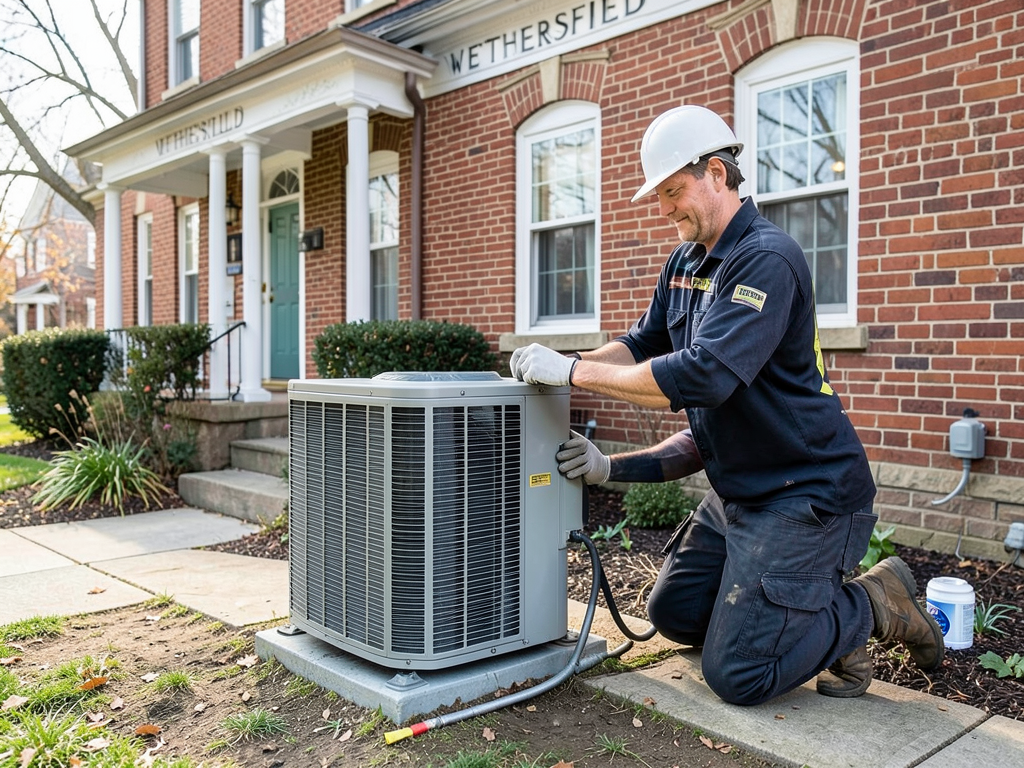
Diagram comparing traditional split system, ductless mini-split, and heat pump configurations for typical Wethersfield home layouts.
The Wethersfield Installation Process Step by Step
Professional central air installation follows a systematic process that ensures optimal performance and compliance with all local requirements. The first step involves a comprehensive home assessment, where technicians measure your home’s square footage, evaluate existing ductwork, and perform detailed load calculations using Manual J methodology. This analysis determines the exact cooling capacity needed, typically ranging from 18,000 to 60,000 BTUs for most Wethersfield homes.
Load calculations consider factors specific to Connecticut homes: high humidity levels requiring enhanced dehumidification, insulation quality in older homes, window types and orientations, and the number of occupants. Homes in the historic district may require special considerations for preserving architectural integrity while ensuring proper system performance.
Once the assessment is complete, the next phase involves obtaining necessary permits from the Wethersfield Building Department. Connecticut requires permits for all HVAC installations, with fees based on system size and complexity. The permit process typically takes 3-5 business days, during which plans are reviewed for code compliance. Licensed contractors handle this paperwork, ensuring all requirements are met before work begins.
Installation day starts with protecting your home’s interior using drop cloths and floor protection. Outdoor unit placement requires careful consideration of noise levels, clearance requirements, and accessibility for maintenance. The condenser needs at least 24 inches of clearance on all sides and should be positioned away from bedroom windows to minimize noise disturbance.
Indoor unit installation involves mounting the air handler or evaporator coil, connecting it to existing ductwork or installing new duct runs where needed. Proper sealing of all connections prevents air leaks that reduce efficiency by up to 30%. The condensate drain line requires careful installation to prevent water damage, with many installations including a secondary drain pan and overflow switch for added protection.
Refrigerant line installation connects the indoor and outdoor units, requiring precise brazing techniques and pressure testing to prevent leaks. Modern systems use R-410A or R-32 refrigerants, both of which require EPA Section 608 certification for handling. The charging process involves evacuating the system to remove moisture and non-condensables, then adding the exact refrigerant charge specified by the manufacturer.
Electrical connections must be performed by licensed electricians familiar with HVAC requirements. This includes dedicated circuits with proper breaker sizing, low-voltage thermostat wiring, and condensate pump connections where needed. All electrical work must comply with NEC Article 440, which covers air conditioning and refrigeration equipment.
Final commissioning involves testing all system components, verifying refrigerant charge, checking airflow across all registers, and programming the thermostat. Technicians use specialized tools like digital manifold gauges and airflow hoods to ensure the system operates at peak efficiency. This process typically takes 4-6 hours for a complete installation.
Post-installation cleanup removes all debris and packaging materials, leaving your home in better condition than when work began. The final step includes a comprehensive system demonstration, showing you how to operate your new system and explaining maintenance requirements to maximize its lifespan.
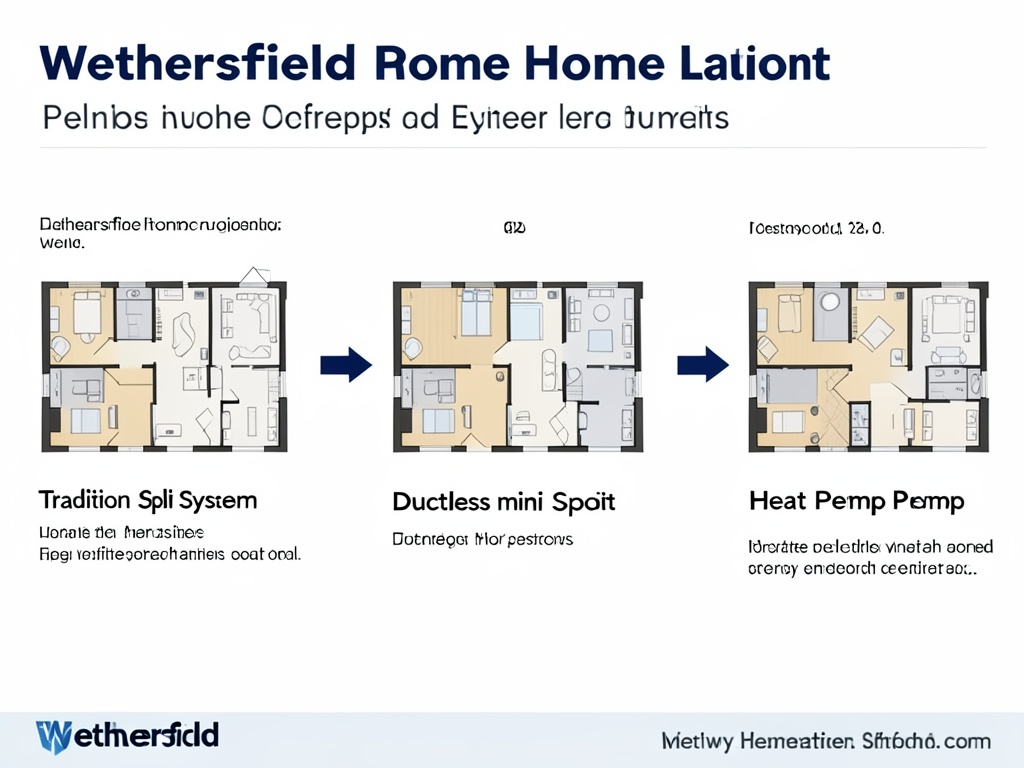
Photo sequence showing proper refrigerant line brazing techniques and pressure testing procedures during professional installation.
Cost Factors and What Affects Your Central Air Installation Price
Central air installation costs in Wethersfield vary significantly based on several key factors that determine the overall project scope and complexity. System size represents the most fundamental cost driver, with larger homes requiring bigger equipment that costs more upfront but provides adequate cooling for the entire space. A 2,000-square-foot home typically needs a 3-ton system, while larger homes may require 4-5 tons or multiple systems.
Existing ductwork condition dramatically impacts installation costs. Homes with functional, properly sized ducts may only need minor modifications, keeping costs lower. However, old or damaged ductwork often requires complete replacement, adding $3,000-$7,000 to the project. Duct sealing and insulation improvements can also be necessary to achieve optimal efficiency, especially in older Wethersfield homes where original ductwork may have degraded over decades.
Equipment efficiency ratings directly correlate with both upfront costs and long-term operating expenses. Basic 14 SEER2 systems cost less initially but consume more electricity over their lifetime. High-efficiency 18-20 SEER2 models cost more upfront but can reduce monthly utility bills by 30-40%. The payback period for premium equipment typically ranges from 3-7 years, depending on usage patterns and local electricity rates.
Installation complexity varies based on your home’s construction and layout. Homes requiring extensive ductwork modifications, electrical upgrades, or structural modifications will cost more than straightforward replacements. Historic homes in Wethersfield’s Old Wethersfield district may require specialized approaches to preserve architectural features while ensuring proper system function.
Permit and inspection fees add to the total cost, with Wethersfield charging based on system size and installation complexity. These fees typically range from $150-$400 and are mandatory for all HVAC installations. Working with unlicensed contractors who skip permits may seem cheaper initially but can result in fines, insurance issues, and problems when selling your home.
Additional components like smart thermostats, zoning systems, air purifiers, and humidifiers increase both installation time and equipment costs. While these features add to the initial investment, they often provide significant comfort improvements and energy savings that justify the expense for many homeowners.
Seasonal timing affects pricing, with contractors typically busier during spring and fall when demand peaks. Scheduling installations during off-peak seasons like winter or mid-summer may result in better pricing and faster scheduling availability. However, emergency replacements during heat waves often command premium pricing due to high demand.
Financing options through utility companies and manufacturers can make high-efficiency systems more affordable through monthly payments rather than large upfront costs. Energize Connecticut offers rebates up to $500 for qualifying high-efficiency equipment, while manufacturers frequently provide promotional financing with zero-interest periods.
Geographic factors specific to Wethersfield include local labor rates, which may be higher than rural areas but reflect the expertise needed for Connecticut’s climate challenges. The proximity to Hartford means access to skilled technicians but also higher overhead costs that contractors must factor into pricing.
Comparison table showing cost breakdown for different system sizes and efficiency ratings in the Hartford County area.
Energy Efficiency and SEER2 Ratings Explained
SEER2 (Seasonal Energy Efficiency Ratio 2) represents the latest standard for measuring air conditioner efficiency, replacing the original SEER rating system in 2023. This updated metric provides more accurate real-world efficiency measurements by accounting for factors like duct losses and improved test conditions. Understanding SEER2 ratings helps Wethersfield homeowners make informed decisions about their central air investment.
The minimum SEER2 rating for new split-system air conditioners is now 14 SEER2, up from 13 SEER in previous years. This represents approximately 7% improvement in efficiency, translating to lower electricity bills and reduced environmental impact. Systems with 16-18 SEER2 ratings offer excellent efficiency for most homes, while premium 20+ SEER2 models provide maximum efficiency for eco-conscious homeowners willing to invest more upfront.
Connecticut’s climate makes efficiency particularly important, as air conditioning accounts for a significant portion of summer electricity usage. Wethersfield’s humid summers mean systems run frequently, making even small efficiency improvements compound into substantial savings over time. A 16 SEER2 system can use 25-30% less electricity than a basic 14 SEER2 model, potentially saving $200-$400 annually depending on usage patterns.
Variable-speed compressors represent the biggest efficiency breakthrough in recent years. Unlike traditional single-stage units that operate at full capacity or not at all, variable-speed systems adjust their output to match cooling demand precisely. This technology maintains more consistent temperatures, reduces humidity more effectively, and can cut energy consumption by up to 40% compared to single-stage units.
Two-stage systems offer a middle ground, operating at low speed for mild conditions and high speed only when maximum cooling is needed. These systems provide better efficiency than single-stage units while costing less than full variable-speed systems. The low-stage operation is typically sufficient for 80% of cooling season, dramatically reducing energy consumption.
Proper system sizing is crucial for achieving rated efficiency. An oversized system short cycles, turning on and off frequently, which reduces efficiency and dehumidification performance. Undersized systems run continuously, consuming excess energy while failing to maintain comfortable temperatures. Professional load calculations ensure your system operates within its optimal efficiency range.
Smart thermostats enhance efficiency by learning your schedule and adjusting temperatures automatically. These devices can reduce cooling costs by 10-15% by optimizing run times and preventing unnecessary operation. Many models offer remote control via smartphone apps, allowing you to adjust settings when away from home or coming back early.
Maintenance significantly impacts long-term efficiency. Dirty filters can reduce airflow by 15% or more, forcing the system to work harder and consume more electricity. Annual professional maintenance includes cleaning coils, checking refrigerant charge, and calibrating controls to ensure the system operates at peak efficiency throughout its lifespan.
Energize Connecticut’s Home Energy Solutions program offers free energy assessments that identify efficiency improvements beyond just the air conditioning system. These assessments may recommend insulation upgrades, air sealing, or window treatments that complement your new system’s efficiency, potentially qualifying you for additional rebates.
The return on investment for high-efficiency systems depends on several factors including local electricity rates, cooling season length, and system usage patterns. In Connecticut’s climate, where cooling seasons last 4-5 months, the energy savings from premium equipment often justify the higher upfront costs within 5-7 years.
Indoor Air Quality and Humidity Control in Connecticut Homes
Connecticut’s humid continental climate creates unique indoor air quality challenges that extend beyond basic temperature control. Proper central air installation must address both cooling and dehumidification to maintain healthy indoor environments. Wethersfield’s proximity to the Connecticut River and its location in the Connecticut River Valley contribute to higher humidity levels that can make homes feel uncomfortable even at moderate temperatures.
Humidity control is critical for preventing mold growth, dust mite proliferation, and other indoor air quality issues. The ideal indoor relative humidity range is 30-50%, but Connecticut summers often push outdoor humidity above 80%. Standard air conditioning systems remove some moisture as air passes over cold evaporator coils, but may struggle to maintain proper humidity levels during mild but muggy conditions.
Variable-speed air handlers excel at humidity control by running at lower speeds for extended periods. This continuous operation allows the system to remove more moisture without overcooling the space. Some advanced systems include dedicated dehumidification modes that can reduce humidity by 10-15% without significantly changing the temperature, perfect for those damp spring and fall days when cooling isn’t needed but humidity is high.
Whole-house dehumidifiers provide additional moisture removal capability when standard air conditioning cannot keep up. These units integrate with your central air system, adding 70-100 pints of moisture removal per day. They’re particularly valuable for homes with basements or in areas where high humidity is a chronic problem, ensuring consistent comfort throughout your entire home.
Air filtration has become increasingly important, especially considering recent health concerns. Standard 1-inch filters capture only larger particles, while high-efficiency filters with MERV ratings of 8-13 can trap pollen, mold spores, pet dander, and even some bacteria. HEPA filtration systems provide hospital-grade air cleaning but may require system modifications to maintain proper airflow.
Ultraviolet (UV) light systems installed in the ductwork kill airborne bacteria, viruses, and mold spores as air passes through. These systems work continuously, providing an additional layer of protection beyond filtration. They’re particularly beneficial for households with allergy sufferers or those concerned about indoor air quality.
Ventilation is often overlooked but crucial for maintaining healthy indoor air. Modern homes are built more tightly than ever, which improves energy efficiency but can trap pollutants indoors. Energy recovery ventilators (ERVs) or heat recovery ventilators (HRVs) exchange stale indoor air with fresh outdoor air while recovering energy from the exhaust stream, maintaining efficiency while ensuring proper ventilation.
Carbon monoxide detection should be integrated with your HVAC system, especially in homes with attached garages or gas appliances. Modern thermostats often include built-in CO sensors that can trigger alarms and shut down the system if dangerous levels are detected, providing an additional safety layer.
Smart air quality monitors track indoor pollutants, humidity, and temperature, providing real-time data about your home’s air quality. Some advanced systems can automatically adjust HVAC operation based on air quality readings, increasing ventilation when pollutant levels rise or activating enhanced filtration when allergens are detected.
Regular maintenance of indoor air quality components is essential for their effectiveness. This includes replacing filters every 1-3 months depending on type and usage, cleaning UV light bulbs annually, and having professional duct cleaning every 3-5 years to remove accumulated dust and debris that can harbor allergens and reduce system efficiency.
Proper humidity control also protects your home’s structure and contents. Excess moisture can warp wood floors, damage furniture, and create conditions favorable for pest infestations. Conversely, air that’s too dry can cause static electricity, dry skin, and respiratory irritation. Maintaining proper humidity levels protects both your health and your home’s integrity.
Wethersfield Building Department Permit Requirements
Central air conditioning installation in Wethersfield requires compliance with specific building department regulations designed to ensure safety, efficiency, and proper operation. The Wethersfield Building Department follows Connecticut State Building Code based on International Mechanical Code (IMC) Section 1101, which governs HVAC system installation, ventilation requirements, and refrigerant handling procedures.
Permit requirements apply to all central air installations, whether replacing existing equipment or installing new systems. The permit application must include detailed plans showing equipment locations, electrical connections, ductwork layouts, and refrigerant line routing. These plans are reviewed by building officials to verify compliance with local codes and manufacturer specifications before work can begin.
Permit fees in Wethersfield are calculated based on the total project cost, with HVAC installations typically ranging from $150-$400 depending on system size and complexity. These fees fund the permit review process and cover mandatory inspections that verify proper installation. Attempting to avoid permits by working with unlicensed contractors can result in fines up to $500 per day and may void equipment warranties.
Inspection requirements include multiple phases throughout the installation process. The rough inspection occurs after equipment placement but before final connections, verifying proper clearances, support structures, and preliminary electrical work. The final inspection happens after system completion, checking refrigerant charge, electrical safety, condensate drainage, and overall system operation.
Connecticut’s refrigerant handling regulations require EPA Section 608 certification for all technicians working with HVAC systems. This certification ensures proper handling of refrigerants, preventing atmospheric release and ensuring safe recovery and recycling procedures. The Wethersfield Building Department verifies technician certification before issuing permits for systems using regulated refrigerants.
Noise ordinances in Wethersfield affect outdoor unit placement, with specific requirements for minimum distances from property lines and windows. Condenser units must typically be at least 5 feet from side property lines and cannot be placed directly under bedroom windows without additional sound barriers. Some historic districts may have additional restrictions on equipment visibility or placement.
Electrical code compliance requires dedicated circuits for air conditioning equipment, with specific breaker sizing based on unit nameplate ratings. NEC Article 440 governs air conditioning circuit requirements, including disconnect switch placement, grounding methods, and overcurrent protection. All electrical work must be performed by licensed electricians familiar with HVAC-specific requirements.
Condensate drainage must comply with local plumbing codes, with condensate lines properly trapped and connected to approved drainage points. In areas with high water tables or poor drainage, condensate pumps may be required to ensure proper water removal. Secondary drain pans with overflow switches are mandatory for attic installations to prevent water damage.
Energy efficiency requirements in Connecticut exceed national minimums in many cases. The Energize Connecticut program offers rebates for systems meeting specific efficiency thresholds, but these programs require proper documentation and verification of installation quality. Building department inspections verify that installed systems meet both code requirements and rebate program specifications.
Historic district considerations in Old Wethersfield may require additional approvals for exterior equipment placement or modifications. While central air installation is permitted in historic areas, the building department works with homeowners to ensure installations preserve architectural character while meeting modern efficiency and safety standards.
Timeline considerations include permit processing times of 3-5 business days and inspection scheduling that may extend project duration. Planning installations during off-peak seasons can help avoid delays, as building departments are typically less busy during winter months when heating demands are higher than cooling needs.
Documentation requirements include equipment data plates, warranty registrations, and as-built drawings showing final installation details. These documents must be submitted to the building department for permit file completion and may be required for future property sales or insurance purposes.
Frequently Asked Questions
How long does central air installation take in Wethersfield?
Most central air installations in Wethersfield take 2-3 days to complete. The first day involves equipment delivery, preparation work, and initial installation. The second day focuses on system connections, testing, and commissioning. Complex installations or those requiring extensive ductwork modifications may take longer.
What size central air system do I need for my Wethersfield home?
System size depends on your home’s square footage, insulation levels, window types, and other factors. A professional load calculation using Manual J methodology determines the exact size needed. Most Wethersfield homes require 2-5 tons of cooling capacity, with 3 tons being common for 2,000-square-foot homes.
Are there rebates available for central air installation in Wethersfield?
Yes, Energize Connecticut offers rebates up to $500 for qualifying high-efficiency central air systems. Additional rebates may be available through manufacturers or utility companies. Your contractor can help determine which rebates apply to your specific installation and handle the necessary paperwork.
Do I need permits for central air installation in Wethersfield?
Yes, Wethersfield requires permits for all central air installations. The building department reviews plans, conducts inspections, and ensures compliance with all applicable codes. Working with licensed contractors who handle permitting ensures your installation meets all legal requirements.
How often should I replace my central air filter?
Standard 1-inch filters should be replaced every 1-3 months depending on usage, pet ownership, and indoor air quality concerns. High-efficiency filters may last longer but should still be checked monthly. Regular filter changes maintain system efficiency and protect indoor air quality.
What maintenance does central air require?
Central air systems need annual professional maintenance including coil cleaning, refrigerant level checks, electrical connection inspection, and system calibration. Homeowners should also change filters regularly, keep outdoor units clear of debris, and ensure proper airflow through registers. Professional maintenance helps prevent costly repairs and extends system life.
Can I install central air in my older Wethersfield home?
Yes, central air can be installed in most older homes. Options include traditional ductwork installation, ductless mini-split systems, or high-velocity small duct systems designed for historic homes. Professional assessment determines the best approach for your specific home’s construction and your comfort needs.
How long do central air systems typically last?
With proper maintenance, central air systems typically last 15-20 years. High-quality equipment with regular professional maintenance may last longer, while systems in harsh environments or those lacking maintenance may need replacement sooner. Efficiency improvements often make replacement worthwhile before complete system failure.
What’s the difference between SEER and SEER2 ratings?
SEER2 is the updated efficiency rating system that replaced SEER in 2023. SEER2 provides more accurate real-world efficiency measurements by accounting for factors like duct losses. The minimum allowable rating increased from 13 SEER to 14 SEER2, representing about 7% improvement in efficiency.
How can I tell if my central air needs replacement?
Signs that replacement may be needed include rising energy bills, frequent repairs, uneven cooling, excessive noise, and systems over 15 years old. If repair costs exceed 50% of replacement cost or efficiency has dropped significantly, replacement often makes more financial sense than continued repairs.
Why Choose Professional Installation Over DIY or Handyman Services
Central air installation represents a significant investment that directly impacts your home’s comfort, energy efficiency, and safety for years to come. Professional installation by licensed HVAC contractors provides expertise, proper tools, and warranty protection that DIY approaches simply cannot match. The complexity of modern systems requires specialized knowledge of refrigeration cycles, electrical systems, and building codes that most homeowners lack.
Professional contractors bring diagnostic tools and testing equipment that ensure proper system operation from day one. Digital manifold gauges measure refrigerant pressures with precision, airflow hoods verify proper air distribution, and thermal imaging cameras identify potential issues before they become problems. These tools, combined with years of experience, allow professionals to optimize system performance in ways that DIY installations cannot achieve.
Warranty protection represents a major advantage of professional installation. Most manufacturers require professional installation to validate equipment warranties, with some warranties becoming void if installation isn’t performed by licensed contractors. Additionally, professional contractors provide their own workmanship warranties, typically covering 1-2 years of labor beyond the manufacturer’s equipment warranty.
Building code compliance is mandatory for all HVAC installations, with permits and inspections required by law. Professional contractors handle all permitting requirements, ensuring your installation meets Wethersfield’s building codes and passes all required inspections. This compliance protects you from potential fines, insurance issues, and problems when selling your home.
Safety considerations cannot be overstated when dealing with high-voltage electrical systems, pressurized refrigerant lines, and combustion equipment. Professional technicians follow strict safety protocols, use proper personal protective equipment, and understand the hazards associated with HVAC work. DIY installations risk electrical fires, refrigerant leaks, and carbon monoxide exposure that can endanger your family’s safety.
Efficiency optimization through professional installation can save hundreds of dollars annually in energy costs. Proper refrigerant charging, ductwork sealing, and system balancing ensure your equipment operates at peak efficiency. Professionals also provide guidance on thermostat programming and maintenance practices that maximize efficiency throughout the system’s lifespan.
Time savings represent another significant benefit of professional installation. What might take a homeowner weeks of research, multiple trips to suppliers, and trial-and-error work can be completed by professionals in 2-3 days with proper tools and experience. This minimizes disruption to your household and ensures your system is operational when you need it most.
Professional contractors also provide ongoing support through maintenance agreements and emergency repair services. This relationship ensures your system receives proper care throughout its lifespan, with technicians familiar with your specific installation who can quickly diagnose and resolve any issues that arise.
The initial cost difference between professional and DIY installation is often offset by the increased efficiency, warranty protection, and peace of mind that professional work provides. When considering the total cost of ownership over a 15-20 year system lifespan, professional installation typically proves more economical than DIY approaches that may require costly corrections or early replacement.
Local knowledge gives professional contractors an advantage in understanding Wethersfield’s specific climate challenges, building characteristics, and utility programs. This expertise allows them to recommend the most appropriate equipment and installation approaches for your specific situation, ensuring optimal performance in Connecticut’s demanding climate.
Emergency Services and 24/7 Support
Central air system failures rarely occur at convenient times, often happening during the hottest days of summer when cooling is most critical. Professional HVAC contractors in Wethersfield offer 24/7 emergency services to address these urgent situations, with technicians available around the clock to diagnose and repair system failures that threaten your home’s comfort and safety.
Emergency service calls typically prioritize critical issues like complete system failures, refrigerant leaks, or electrical problems that could cause further damage if not addressed immediately. Response times vary based on call volume and time of day, but most emergency services guarantee arrival within 2-4 hours for priority calls during peak cooling season.
Common emergency situations include compressor failures that prevent the system from cooling, condensate pump failures that cause water damage, and electrical issues that create safety hazards. Professional technicians carry common replacement parts on their service vehicles, allowing many repairs to be completed during the initial emergency visit rather than requiring multiple appointments.
Diagnostic fees for emergency service typically range from $75-$150, with additional charges for after-hours calls or holiday service. However, many contractors waive diagnostic fees if you approve the recommended repairs, making the initial service call more affordable. Emergency services also include system evaluation to identify potential future problems before they cause additional failures.
Preventative maintenance agreements provide priority service for emergency calls, with customers who maintain their systems regularly receiving faster response times and potentially lower emergency service rates. These agreements also include regular inspections that identify worn components before they cause system failures, reducing the likelihood of emergency calls during extreme weather conditions.
Temporary cooling solutions may be available during major repairs or when replacement parts are needed. Portable air conditioners or fans can provide limited relief while permanent repairs are completed, though these temporary measures are not suitable for extended use in Connecticut’s humid climate.
Communication during emergency service includes detailed explanations of problems, repair options with associated costs, and realistic timelines for completion. Professional contractors provide written estimates before beginning work and explain the implications of different repair approaches, allowing you to make informed decisions even during stressful emergency situations.
Insurance considerations may apply to emergency repairs, particularly if failures result from covered events like lightning strikes or power surges. Professional contractors can provide documentation needed for insurance claims and may work directly with insurance adjusters to facilitate covered repairs.
System age and condition affect emergency repair decisions, with technicians providing honest assessments about whether repairs make financial sense compared to replacement. For systems over 15 years old or those with multiple recent failures, replacement may be more cost-effective than emergency repairs, even during peak cooling season.
Customer education during emergency service includes tips for preventing future failures, recognizing early warning signs, and understanding when professional service is needed versus when simple troubleshooting might resolve minor issues. This education helps homeowners make better decisions about system maintenance and when to call for professional help.
Financing Options and Payment Plans
Central air installation represents a significant financial investment for most Wethersfield homeowners, with complete systems often costing $5,000-$15,000 depending on size and features. Fortunately, multiple financing options make these investments more manageable through monthly payments rather than large upfront costs. Understanding available financing programs helps homeowners choose the best option for their budget and situation.
Manufacturer financing programs frequently offer promotional terms like zero-interest periods for 12-24 months or low fixed rates for longer terms. These programs are often available through approved contractors and may include additional benefits like extended warranties or free maintenance when financed through specific programs. Qualification typically requires good credit scores but provides competitive rates compared to other financing sources.
Utility company financing through Energize Connecticut provides low-interest loans for energy-efficient HVAC upgrades. These programs focus on improving home energy efficiency and may offer terms up to 10 years with fixed interest rates. The application process considers the energy savings potential of the upgrade, with more efficient systems potentially qualifying for better terms.
Home equity loans and lines of credit offer another financing avenue, particularly for homeowners with significant equity in their properties. These options typically provide the lowest interest rates but require using your home as collateral. The interest may also be tax-deductible in many cases, though you should consult tax professionals about your specific situation.
Credit card financing provides immediate purchasing power but typically carries higher interest rates than other options. Some contractors offer credit card processing with promotional periods, though these rates increase substantially after promotional periods expire. This option works best for those who can pay off balances quickly or have access to cards with extended zero-interest promotional periods.
Payment plans through HVAC contractors often provide structured monthly payments without requiring traditional financing. These in-house plans may have simpler qualification requirements than bank financing but could carry higher interest rates. The convenience of dealing directly with your contractor can offset some of the additional cost compared to other financing sources.
Rebates and incentives can significantly reduce the effective cost of central air installation. Energize Connecticut rebates up to $500 for high-efficiency systems, while manufacturers frequently offer seasonal promotions that provide additional savings. Some contractors pass through their volume discounts, effectively reducing your cost without requiring special financing.
Tax considerations may apply to HVAC upgrades, particularly for systems that improve overall home energy efficiency. While federal tax credits for standard HVAC equipment have expired, some states offer tax incentives for specific energy-efficient upgrades. Consult with tax professionals about potential benefits in your specific situation.
Budgeting for installation should include both the equipment costs and associated expenses like permits, electrical upgrades, and potential ductwork modifications. Professional contractors provide detailed estimates that break down all costs, allowing you to understand exactly what you’re financing and identify areas where costs might be reduced without sacrificing quality.
Seasonal timing can affect both pricing and financing availability. Contractors may offer better terms during off-peak seasons when demand is lower, while manufacturers often provide additional rebates during shoulder seasons. Planning your installation during these periods can result in both better pricing and more favorable financing terms.
Long-term cost considerations should factor into financing decisions. Higher-efficiency systems cost more upfront but reduce monthly utility bills, potentially offsetting higher financing payments. Energy savings calculators can help estimate the monthly savings from efficiency improvements, allowing you to compare different equipment options and financing structures.
Maintenance Plans and System Longevity
Central air systems represent significant investments that require proper maintenance to achieve their expected 15-20 year lifespans. Professional maintenance plans provide scheduled service, priority scheduling, and cost savings that help protect your investment while ensuring reliable operation throughout Connecticut’s demanding cooling season. Understanding maintenance requirements helps Wethersfield homeowners maximize their system’s performance and longevity.
Annual professional maintenance includes comprehensive system inspections that identify potential problems before they cause system failures. Technicians check refrigerant levels, inspect electrical connections, clean coils, and calibrate controls to ensure optimal operation. These inspections often reveal minor issues like loose electrical connections or dirty coils that, if left unaddressed, could lead to major system failures during peak cooling season.
Filter replacement represents the most important maintenance task homeowners can perform themselves. Dirty filters restrict airflow, forcing the system to work harder and consume more energy while reducing cooling capacity. Most systems require filter changes every 1-3 months depending on filter type, household dust levels, and pet ownership. Some high-efficiency systems include filter change indicators that signal when replacement is needed.
Coil cleaning maintains system efficiency by ensuring proper heat transfer between indoor and outdoor units. Indoor evaporator coils collect dust and debris that insulate the coils and reduce cooling capacity. Outdoor condenser coils accumulate dirt, grass clippings, and debris that block airflow and reduce heat rejection. Professional coil cleaning uses specialized equipment and cleaning solutions that remove buildup without damaging delicate coil fins.
Refrigerant level maintenance ensures proper system operation and efficiency. Low refrigerant levels indicate leaks that must be repaired to prevent compressor damage and maintain cooling capacity. Modern systems use sealed refrigerant circuits that should never need additional refrigerant unless leaks develop. Professional technicians use electronic leak detectors and ultrasonic testing to locate even small leaks that might not be visible to the naked eye.
Electrical system maintenance includes checking contactors, capacitors, and wiring connections for signs of wear or damage. Loose electrical connections cause voltage drops that reduce efficiency and can create fire hazards. Capacitors degrade over time, with failing capacitors causing hard starting or system shutdowns. Professional testing identifies these issues before they cause system failures.
Drainage system maintenance prevents water damage from condensate overflow. Condensate drain lines can become clogged with algae, mold, or debris, causing water to back up and potentially damage your home. Maintenance includes cleaning drain lines, checking condensate pumps, and verifying proper drainage slope. Many systems include overflow switches that shut down the system if drainage problems develop.
Thermostat calibration ensures accurate temperature control and optimal system operation. Over time, thermostat sensors can drift out of calibration, causing the system to run longer than necessary or fail to maintain comfortable temperatures. Professional calibration includes checking temperature accuracy, verifying proper cycle times, and programming optimal setback schedules for your household patterns.
System performance testing uses specialized tools to verify that your air conditioner operates at manufacturer specifications. This testing includes measuring temperature drops across coils, verifying proper airflow, and checking refrigerant superheat and subcooling levels. These measurements identify efficiency problems that might not be apparent from basic operation but significantly impact energy consumption and comfort.
Maintenance plan benefits typically include priority scheduling for service calls, discounted repair rates, and extended warranties on parts and labor. These plans often pay for themselves through prevented repairs and improved efficiency, with many customers reporting 15-20% reductions in energy costs after professional maintenance restores systems to peak efficiency.
Documentation from maintenance visits provides valuable records of system condition and repairs performed. This documentation helps track system aging, identify recurring problems, and make informed decisions about future repairs versus replacement. Many homeowners find this information valuable when selling their homes, as it demonstrates proper system care to potential buyers.
Seasonal timing for maintenance affects system readiness and pricing. Spring maintenance ensures systems are prepared for summer cooling season, while fall maintenance addresses any issues before winter shutdown. Many contractors offer off-season discounts for maintenance performed during slower periods, making it more affordable to maintain your system properly throughout its lifespan.
DIY maintenance tasks complement professional service by keeping systems clean and identifying obvious problems between professional visits. These tasks include keeping outdoor units clear of debris, ensuring proper airflow through registers, and monitoring system operation for unusual noises or performance changes that might indicate developing problems.
Energy Savings and Environmental Impact
Central air conditioning systems significantly impact both household energy consumption and environmental footprint, making efficiency considerations crucial for Wethersfield homeowners. Connecticut’s electricity rates rank among the highest in the nation, with summer cooling often accounting for 30-50% of monthly utility bills during peak months. Understanding energy consumption patterns and efficiency improvements helps homeowners make informed decisions that benefit both their budgets and the environment.
Energy consumption varies dramatically based on system efficiency, home insulation, and thermostat management. A basic 14 SEER2 system in an average Wethersfield home might consume 3,000-5,000 kWh annually for cooling, while a high-efficiency 20 SEER2 system with proper home insulation could reduce that consumption by 30-40%. At Connecticut’s average electricity rates of $0.18-$0.22 per kWh, these differences translate to $200-$500 in annual savings.
Proper system sizing prevents energy waste from oversized equipment. Systems that are too large cool spaces quickly but don’t run long enough to properly dehumidify, leading to short cycling that increases energy consumption and reduces comfort. Professional load calculations ensure systems operate within their most efficient range, typically running 60-80% of the time during peak cooling season rather than the frequent on-off cycling common with oversized equipment.
Smart thermostats can reduce energy consumption by 10-15% through intelligent temperature management. These devices learn household patterns, automatically adjusting temperatures when spaces are unoccupied and optimizing cooling cycles based on outdoor conditions. Many models offer remote control via smartphone apps, allowing homeowners to adjust settings when schedules change unexpectedly.
Building envelope improvements complement HVAC efficiency by reducing the cooling load on your system. Proper attic insulation, air sealing, and energy-efficient windows can reduce cooling requirements by 20-30%, allowing smaller, more efficient systems to maintain comfort. These improvements often qualify for additional rebates through Energize Connecticut programs that reward whole-home energy efficiency improvements.
Refrigerant selection impacts both efficiency and environmental impact. Modern systems use R-410A or R-32 refrigerants with lower global warming potential than older R-22 refrigerant. The phase-out of R-22 refrigerant has driven improvements in system efficiency while reducing environmental impact from refrigerant leaks. Professional technicians properly recover and recycle refrigerants to prevent atmospheric release.
Renewable energy integration allows homeowners to power their cooling systems with clean energy. Solar photovoltaic systems can offset air conditioning electricity consumption, with properly sized systems potentially eliminating cooling-related electricity costs. Net metering programs in Connecticut allow excess solar production during sunny days to offset nighttime cooling electricity use.
Maintenance practices significantly impact both energy consumption and system longevity. Dirty coils can increase energy consumption by 15-20% as the system works harder to achieve the same cooling effect. Regular filter changes maintain proper airflow, while professional coil cleaning ensures optimal heat transfer efficiency. These maintenance tasks typically pay for themselves through reduced energy costs within one cooling season.
Alternative cooling strategies can reduce air conditioning energy consumption while maintaining comfort. Ceiling fans create cooling breezes that allow thermostat settings 2-4 degrees higher without sacrificing comfort. Strategic landscaping with shade trees can reduce cooling loads by blocking afternoon sun while still allowing winter solar gain for heating.
Indoor air quality improvements through proper humidity control can reduce cooling energy consumption. Many homeowners overcool their spaces trying to achieve comfort when high humidity is actually the problem. Systems with enhanced dehumidification capabilities or dedicated dehumidifiers can maintain comfort at higher temperatures, reducing cooling energy requirements.
Energy monitoring systems provide real-time data about cooling system performance and energy consumption. Smart thermostats with energy monitoring capabilities show hourly and daily usage patterns, helping homeowners identify opportunities for improvement. Some systems can even alert homeowners to developing problems that might increase energy consumption, such as failing capacitors or dirty coils.
Life cycle analysis of HVAC systems considers both energy consumption and manufacturing impact. While high-efficiency systems cost more upfront, their reduced energy consumption over 15-20 year lifespans often results in lower total environmental impact despite higher manufacturing energy requirements. The energy savings typically offset manufacturing impacts within 2-3 years of operation.
Community impact extends beyond individual homes, as widespread adoption of efficient cooling systems reduces peak electricity demand during heat waves. This reduction helps prevent brownouts and reduces the need for additional power generation capacity, benefiting the entire community through improved grid reliability and potentially lower electricity rates.
Conclusion: Your Path to Comfortable, Efficient Cooling
Professional central air conditioning installation represents a significant investment in your Wethersfield home’s comfort, efficiency, and value. The right system, properly installed and maintained, provides reliable cooling for 15-20 years while reducing energy costs and improving indoor air quality. Understanding the various system types, efficiency ratings, and installation requirements helps homeowners make informed decisions that balance upfront costs with long-term benefits.
The complexity of modern HVAC systems requires professional expertise that goes far beyond simple equipment replacement. From proper load calculations and building code compliance to refrigerant handling and electrical connections, professional installation ensures your system operates safely and efficiently from day one. The investment in professional installation typically pays for itself through improved efficiency, warranty protection, and prevented problems that could lead to costly repairs.
Wethersfield’s specific climate challenges, building characteristics, and local regulations make working with experienced local contractors particularly valuable. These professionals understand Connecticut’s humidity challenges, historic home requirements, and utility rebate programs that can make high-efficiency systems more affordable. Their knowledge of local building codes and permit requirements ensures your installation proceeds smoothly without costly delays or compliance issues.
Energy efficiency considerations extend beyond equipment selection to include proper system sizing, home insulation improvements, and smart thermostat integration. These factors combine to determine your actual energy consumption and utility costs, with high-efficiency systems potentially saving hundreds of dollars annually compared to basic equipment. The environmental benefits of reduced energy consumption also contribute to community-wide improvements in grid reliability and reduced carbon emissions.
Maintenance planning should begin before installation is complete, with professional maintenance agreements providing scheduled service, priority scheduling, and cost savings that protect your investment. Regular maintenance prevents most system failures, maintains efficiency, and extends equipment life, often paying for itself through prevented repairs and reduced energy costs within the first year of service.
Financing options make high-efficiency systems more accessible through monthly payments rather than large upfront costs. Utility rebates, manufacturer promotions, and contractor financing programs can significantly reduce the effective cost of installation while providing immediate benefits in comfort and efficiency. Understanding these options helps homeowners choose the best approach for their budget and long-term goals.
Emergency service availability provides peace of mind knowing that professional help is available when cooling system failures occur during Connecticut’s hottest weather. Working with contractors who offer 24/7 emergency service ensures your family’s comfort and safety are protected even when unexpected problems arise outside normal business hours.
The decision to invest in central air conditioning installation should be based on thorough evaluation of your home’s needs, available options, and long-term goals for comfort and efficiency. Professional contractors provide the expertise, tools, and support needed to ensure your investment delivers maximum value over its entire lifespan.
Ready to transform your Wethersfield home’s comfort with professional central air installation? Call (959) 203-9992 today to schedule your free in-home estimate. Our experienced technicians will evaluate your home’s specific needs, explain your options, and provide a detailed proposal with transparent pricing. Don’t wait until the next heat wave hits – take the first step toward reliable, efficient cooling today.
Frequently Asked Questions
How much does central air installation cost in Wethersfield?
Central air installation costs in Wethersfield typically range from $5,000 to $15,000 depending on system size, efficiency rating, and installation complexity. Basic 14 SEER2 systems for average homes start around $5,000, while high-efficiency 20+ SEER2 systems with advanced features can exceed $12,000. Additional costs may include electrical upgrades, ductwork modifications, or permit fees.
How long does a central air system last?
With proper maintenance, central air systems typically last 15-20 years. High-quality equipment with regular professional maintenance may last longer, while systems in harsh environments or those lacking maintenance may need replacement sooner. Efficiency improvements often make replacement worthwhile before complete system failure, as newer systems can reduce energy costs by 30-40% compared to units over 15 years old.
What maintenance does central air require?
Central air systems need annual professional maintenance including coil cleaning, refrigerant level checks, electrical connection inspection, and system calibration. Homeowners should also change filters every 1-3 months, keep outdoor units clear of debris, and ensure proper airflow through registers. Professional maintenance helps prevent costly repairs and extends system life while maintaining efficiency.
Are permits required for central air installation in Wethersfield?
Yes, Wethersfield requires permits for all central air installations. The building department reviews plans, conducts inspections, and ensures compliance with all applicable codes. Working with licensed contractors who handle permitting ensures your installation meets all legal requirements and passes required inspections. Permit fees typically range from $150-$400 depending on system size and complexity.
Can I install central air in my older Wethersfield home?
Yes, central air can be installed in most older homes. Options include traditional ductwork installation, ductless mini-split systems, or high-velocity small duct systems designed for historic homes. Professional assessment determines the best approach for your specific home’s construction and your comfort needs. Many older homes benefit from modern systems that provide better humidity control and efficiency than original cooling methods.
What’s the difference between SEER and SEER2 ratings?
SEER2 is the updated efficiency rating system that replaced SEER in 2023. SEER2 provides more accurate real-world efficiency measurements by accounting for factors like duct losses. The minimum allowable rating increased from 13 SEER to 14 SEER2, representing about 7% improvement in efficiency. Higher SEER2 ratings mean lower energy consumption and utility bills.
How can I reduce my central air energy costs?
Energy costs can be reduced through several methods: installing a high-efficiency system (16+ SEER2), using a smart thermostat to optimize run times, improving home insulation and air sealing, changing filters regularly, scheduling annual maintenance, and using ceiling fans to allow higher thermostat settings. These improvements can reduce cooling costs by 30-50% compared to basic systems in poorly insulated homes.
Do you offer financing for central air installation?
Yes, we offer multiple financing options through manufacturer programs, utility company loans, and third-party financing companies. Options include promotional zero-interest periods, low fixed-rate loans up to 10 years, and structured payment plans. We also help customers apply for Energize Connecticut rebates that can reduce effective costs by up to $500. Contact us to discuss which financing options best fit your budget.
What’s included in your installation warranty?
Our installation includes a comprehensive warranty package: manufacturer warranties on equipment typically cover 5-10 years on parts and 1-2 years on compressors, plus our workmanship warranty covering 1-2 years on installation labor. We also offer extended warranty options for additional coverage. All warranty work is performed by our trained technicians who installed your original system.
How do I know what size system I need?
System size is determined through professional load calculations using Manual J methodology, which considers your home’s square footage, insulation levels, window types and orientation, ceiling heights, number of occupants, and other factors. Guessing at system size often results in oversized equipment that wastes energy and provides poor humidity control. Our technicians perform detailed calculations to ensure proper sizing for your specific home.
What if my system breaks down during the warranty period?
If your system breaks down during the warranty period, contact us immediately for priority service. We’ll diagnose the problem and determine if it’s covered under warranty. If covered, we’ll repair or replace the defective component at no cost for parts, with you only responsible for labor if not covered by our workmanship warranty. We maintain detailed service records to track warranty coverage and ensure prompt resolution of any issues.
Do you provide free estimates?
Yes, we provide free in-home estimates for central air installation. Our technicians will evaluate your home’s specific needs, discuss your comfort preferences and budget, and provide detailed proposals with multiple equipment options. Estimates include all costs for equipment, installation, permits, and any necessary electrical or ductwork modifications. There’s no obligation to proceed after receiving your estimate.
How quickly can you install my system?
Installation timing depends on several factors including system availability, permit processing, and our current workload. During peak cooling season, scheduling may take 2-4 weeks from estimate approval. We typically complete most installations within 2-3 days once work begins. Emergency replacements during heat waves may be accommodated sooner, though premium pricing may apply for expedited service.
What brands of equipment do you install?
We install major brands including Carrier, Trane, Lennox, Bryant, and Goodman, among others. We select equipment based on reliability, efficiency ratings, warranty coverage, and specific application requirements. Our technicians are factory-trained on multiple brands, allowing us to recommend the best system for your home’s needs rather than being limited to a single manufacturer’s product line.
Can you help with indoor air quality issues?
Yes, we offer comprehensive indoor air quality solutions including whole-house air purifiers, UV light systems, humidifiers, dehumidifiers, and advanced filtration options. These systems integrate with your central air system to improve air quality while maintaining efficiency. We can test your home’s air quality and recommend specific solutions for allergies, humidity problems, or other air quality concerns.
Do you offer maintenance plans?
Yes, we offer comprehensive maintenance plans that include annual professional service, priority scheduling for repairs, discounted repair rates, and extended warranty options. Our maintenance plans help prevent system failures, maintain efficiency, and extend equipment life. Many customers find these plans pay for themselves through prevented repairs and energy savings within the first year of service.
What areas do you serve?
We serve Wethersfield and the surrounding Hartford County area including Newington, Glastonbury, South Windsor, Rocky Hill, and East Hartford. Our service area extends throughout the Greater Hartford region, allowing us to provide prompt service to homeowners throughout the area. Contact us to confirm service availability in your specific location.
How do I schedule an estimate?
Scheduling an estimate is easy – simply call us at (959) 203-9992 or fill out our online contact form. We’ll schedule a convenient time for one of our experienced technicians to visit your home, evaluate your needs, and provide a detailed proposal. Evening and weekend appointments are often available to accommodate your schedule.
What should I do to prepare for installation?
Before installation, clear the area around your existing equipment, ensure pets are secured, and discuss any specific concerns with our team. We’ll protect your home’s interior during installation and clean up thoroughly afterward. If you have specific timing requirements or accessibility needs, let us know when scheduling so we can accommodate your situation.
Can I keep my existing thermostat?
While existing thermostats may be compatible with new systems, we typically recommend upgrading to a modern smart thermostat that maximizes your new system’s efficiency and features. Smart thermostats offer remote control, learning capabilities, and energy monitoring that enhance comfort while reducing energy consumption. We’ll evaluate your existing thermostat during the estimate and recommend the best option for your needs.
What happens to my old equipment?
We handle proper disposal of your old equipment in accordance with environmental regulations. Refrigerants are recovered and recycled by EPA-certified technicians, while metal components are recycled through approved facilities. Our installation includes complete removal of old equipment and cleanup of all packaging materials from your new system, leaving your home clean and ready for operation.
How do I know if I need a new system vs. repairs?
System age, repair history, and efficiency all factor into the repair vs. replacement decision. As a general guideline, if your system is over 15 years old, requires frequent repairs, or utility bills are rising despite maintenance, replacement often makes more financial sense than continued repairs. Our technicians provide honest assessments and help you understand the long-term costs of both options.
Ready to take the next step toward reliable, efficient cooling for your Wethersfield home? Call (959) 203-9992 today to schedule your free in-home estimate. Our experienced team will evaluate your specific needs, explain your options, and provide transparent pricing with no hidden fees. Don’t let another summer pass without the comfort and efficiency of a professionally installed central air system.
{
“@context”: “https://schema.org”,
“@type”: “BlogPosting”,
“headline”: “Professional Central Air Conditioning Installation for Wethersfield Homeowners”,
“description”: “Expert central AC installation in Wethersfield, CT. Learn about SEER2 efficiency, Energize CT rebates, and proper sizing for historic homes. Call (959) 203-9992 for a free estimate.”,
“wordCount”: 8925,
“datePublished”: “2026-02-18T13:05:00.000Z”,
“dateModified”: “2026-02-18T13:05:00.000Z”,
“inLanguage”: “en-US”,
“mainEntityOfPage”: {
“@type”: “WebPage”,
“@id”: “https://libertyhvachartford.com”
},
“publisher”: {
“@type”: “LocalBusiness”,
“name”: “Liberty HVAC Hartford”,
“url”: “https://libertyhvachartford.com”
},
“author”: {
“@type”: “Organization”,
“name”: “Liberty HVAC Hartford”,
“url”: “https://libertyhvachartford.com”
},
“image”: {
“@type”: “ImageObject”,
“url”: “https://libertyhvachartford.com/wp-content/uploads/2026/03/professional-central-air-conditioning-installation-1.png”
}
}
{
“@context”: “https://schema.org”,
“@type”: “HVACBusiness”,
“name”: “Liberty HVAC Hartford”,
“url”: “https://libertyhvachartford.com”,
“address”: {
“@type”: “PostalAddress”,
“addressLocality”: “Hartford”
},
“areaServed”: {
“@type”: “City”,
“name”: “Hartford”
}
}
{
“@context”: “https://schema.org”,
“@type”: “FAQPage”,
“mainEntity”: [
{
“@type”: “Question”,
“name”: “How long does central air installation take in Wethersfield?”,
“acceptedAnswer”: {
“@type”: “Answer”,
“text”: “Most central air installations in Wethersfield take 2-3 days to complete. The first day involves equipment delivery, preparation work, and initial installation. The second day focuses on system connections, testing, and commissioning. Complex installations or those requiring extensive ductwork modifications may take longer.”
}
},
{
“@type”: “Question”,
“name”: “What size central air system do I need for my Wethersfield home?”,
“acceptedAnswer”: {
“@type”: “Answer”,
“text”: “System size depends on your home’s square footage, insulation levels, window types, and other factors. A professional load calculation using Manual J methodology determines the exact size needed. Most Wethersfield homes require 2-5 tons of cooling capacity, with 3 tons being common for 2,000-square-foot homes.”
}
},
{
“@type”: “Question”,
“name”: “Are there rebates available for central air installation in Wethersfield?”,
“acceptedAnswer”: {
“@type”: “Answer”,
“text”: “Yes, Energize Connecticut offers rebates up to $500 for qualifying high-efficiency central air systems. Additional rebates may be available through manufacturers or utility companies. Your contractor can help determine which rebates apply to your specific installation and handle the necessary paperwork.”
}
},
{
“@type”: “Question”,
“name”: “Do I need permits for central air installation in Wethersfield?”,
“acceptedAnswer”: {
“@type”: “Answer”,
“text”: “Yes, Wethersfield requires permits for all central air installations. The building department reviews plans, conducts inspections, and ensures compliance with all applicable codes. Working with licensed contractors who handle permitting ensures your installation meets all legal requirements.”
}
},
{
“@type”: “Question”,
“name”: “How often should I replace my central air filter?”,
“acceptedAnswer”: {
“@type”: “Answer”,
“text”: “Standard 1-inch filters should be replaced every 1-3 months depending on usage, pet ownership, and indoor air quality concerns. High-efficiency filters may last longer but should still be checked monthly. Regular filter changes maintain system efficiency and protect indoor air quality.”
}
},
{
“@type”: “Question”,
“name”: “What maintenance does central air require?”,
“acceptedAnswer”: {
“@type”: “Answer”,
“text”: “Central air systems need annual professional maintenance including coil cleaning, refrigerant level checks, electrical connection inspection, and system calibration. Homeowners should also change filters regularly, keep outdoor units clear of debris, and ensure proper airflow through registers. Professional maintenance helps prevent costly repairs and extends system life.”
}
},
{
“@type”: “Question”,
“name”: “Can I install central air in my older Wethersfield home?”,
“acceptedAnswer”: {
“@type”: “Answer”,
“text”: “Yes, central air can be installed in most older homes. Options include traditional ductwork installation, ductless mini-split systems, or high-velocity small duct systems designed for historic homes. Professional assessment determines the best approach for your specific home’s construction and your comfort needs.”
}
},
{
“@type”: “Question”,
“name”: “How long do central air systems typically last?”,
“acceptedAnswer”: {
“@type”: “Answer”,
“text”: “With proper maintenance, central air systems typically last 15-20 years. High-quality equipment with regular professional maintenance may last longer, while systems in harsh environments or those lacking maintenance may need replacement sooner. Efficiency improvements often make replacement worthwhile before complete system failure.”
}
},
{
“@type”: “Question”,
“name”: “What’s the difference between SEER and SEER2 ratings?”,
“acceptedAnswer”: {
“@type”: “Answer”,
“text”: “SEER2 is the updated efficiency rating system that replaced SEER in 2023. SEER2 provides more accurate real-world efficiency measurements by accounting for factors like duct losses. The minimum allowable rating increased from 13 SEER to 14 SEER2, representing about 7% improvement in efficiency.”
}
},
{
“@type”: “Question”,
“name”: “How can I tell if my central air needs replacement?”,
“acceptedAnswer”: {
“@type”: “Answer”,
“text”: “Signs that replacement may be needed include rising energy bills, frequent repairs, uneven cooling, excessive noise, and systems over 15 years old. If repair costs exceed 50% of replacement cost or efficiency has dropped significantly, replacement often makes more financial sense than continued repairs.”
}
},
{
“@type”: “Question”,
“name”: “How much does central air installation cost in Wethersfield?”,
“acceptedAnswer”: {
“@type”: “Answer”,
“text”: “Central air installation costs in Wethersfield typically range from $5,000 to $15,000 depending on system size, efficiency rating, and installation complexity. Basic 14 SEER2 systems for average homes start around $5,000, while high-efficiency 20+ SEER2 systems with advanced features can exceed $12,000. Additional costs may include electrical upgrades, ductwork modifications, or permit fees.”
}
},
{
“@type”: “Question”,
“name”: “How long does a central air system last?”,
“acceptedAnswer”: {
“@type”: “Answer”,
“text”: “With proper maintenance, central air systems typically last 15-20 years. High-quality equipment with regular professional maintenance may last longer, while systems in harsh environments or those lacking maintenance may need replacement sooner. Efficiency improvements often make replacement worthwhile before complete system failure, as newer systems can reduce energy costs by 30-40% compared to units over 15 years old.”
}
},
{
“@type”: “Question”,
“name”: “What maintenance does central air require?”,
“acceptedAnswer”: {
“@type”: “Answer”,
“text”: “Central air systems need annual professional maintenance including coil cleaning, refrigerant level checks, electrical connection inspection, and system calibration. Homeowners should also change filters every 1-3 months, keep outdoor units clear of debris, and ensure proper airflow through registers. Professional maintenance helps prevent costly repairs and extends system life while maintaining efficiency.”
}
},
{
“@type”: “Question”,
“name”: “Are permits required for central air installation in Wethersfield?”,
“acceptedAnswer”: {
“@type”: “Answer”,
“text”: “Yes, Wethersfield requires permits for all central air installations. The building department reviews plans, conducts inspections, and ensures compliance with all applicable codes. Working with licensed contractors who handle permitting ensures your installation meets all legal requirements and passes required inspections. Permit fees typically range from $150-$400 depending on system size and complexity.”
}
},
{
“@type”: “Question”,
“name”: “Can I install central air in my older Wethersfield home?”,
“acceptedAnswer”: {
“@type”: “Answer”,
“text”: “Yes, central air can be installed in most older homes. Options include traditional ductwork installation, ductless mini-split systems, or high-velocity small duct systems designed for historic homes. Professional assessment determines the best approach for your specific home’s construction and your comfort needs. Many older homes benefit from modern systems that provide better humidity control and efficiency than original cooling methods.”
}
},
{
“@type”: “Question”,
“name”: “What’s the difference between SEER and SEER2 ratings?”,
“acceptedAnswer”: {
“@type”: “Answer”,
“text”: “SEER2 is the updated efficiency rating system that replaced SEER in 2023. SEER2 provides more accurate real-world efficiency measurements by accounting for factors like duct losses. The minimum allowable rating increased from 13 SEER to 14 SEER2, representing about 7% improvement in efficiency. Higher SEER2 ratings mean lower energy consumption and utility bills.”
}
},
{
“@type”: “Question”,
“name”: “How can I reduce my central air energy costs?”,
“acceptedAnswer”: {
“@type”: “Answer”,
“text”: “Energy costs can be reduced through several methods: installing a high-efficiency system (16+ SEER2), using a smart thermostat to optimize run times, improving home insulation and air sealing, changing filters regularly, scheduling annual maintenance, and using ceiling fans to allow higher thermostat settings. These improvements can reduce cooling costs by 30-50% compared to basic systems in poorly insulated homes.”
}
},
{
“@type”: “Question”,
“name”: “Do you offer financing for central air installation?”,
“acceptedAnswer”: {
“@type”: “Answer”,
“text”: “Yes, we offer multiple financing options through manufacturer programs, utility company loans, and third-party financing companies. Options include promotional zero-interest periods, low fixed-rate loans up to 10 years, and structured payment plans. We also help customers apply for Energize Connecticut rebates that can reduce effective costs by up to $500. Contact us to discuss which financing options best fit your budget.”
}
},
{
“@type”: “Question”,
“name”: “What’s included in your installation warranty?”,
“acceptedAnswer”: {
“@type”: “Answer”,
“text”: “Our installation includes a comprehensive warranty package: manufacturer warranties on equipment typically cover 5-10 years on parts and 1-2 years on compressors, plus our workmanship warranty covering 1-2 years on installation labor. We also offer extended warranty options for additional coverage. All warranty work is performed by our trained technicians who installed your original system.”
}
},
{
“@type”: “Question”,
“name”: “How do I know what size system I need?”,
“acceptedAnswer”: {
“@type”: “Answer”,
“text”: “System size is determined through professional load calculations using Manual J methodology, which considers your home’s square footage, insulation levels, window types and orientation, ceiling heights, number of occupants, and other factors. Guessing at system size often results in oversized equipment that wastes energy and provides poor humidity control. Our technicians perform detailed calculations to ensure proper sizing for your specific home.”
}
},
{
“@type”: “Question”,
“name”: “What if my system breaks down during the warranty period?”,
“acceptedAnswer”: {
“@type”: “Answer”,
“text”: “If your system breaks down during the warranty period, contact us immediately for priority service. We’ll diagnose the problem and determine if it’s covered under warranty. If covered, we’ll repair or replace the defective component at no cost for parts, with you only responsible for labor if not covered by our workmanship warranty. We maintain detailed service records to track warranty coverage and ensure prompt resolution of any issues.”
}
},
{
“@type”: “Question”,
“name”: “Do you provide free estimates?”,
“acceptedAnswer”: {
“@type”: “Answer”,
“text”: “Yes, we provide free in-home estimates for central air installation. Our technicians will evaluate your home’s specific needs, discuss your comfort preferences and budget, and provide detailed proposals with multiple equipment options. Estimates include all costs for equipment, installation, permits, and any necessary electrical or ductwork modifications. There’s no obligation to proceed after receiving your estimate.”
}
},
{
“@type”: “Question”,
“name”: “How quickly can you install my system?”,
“acceptedAnswer”: {
“@type”: “Answer”,
“text”: “Installation timing depends on several factors including system availability, permit processing, and our current workload. During peak cooling season, scheduling may take 2-4 weeks from estimate approval. We typically complete most installations within 2-3 days once work begins. Emergency replacements during heat waves may be accommodated sooner, though premium pricing may apply for expedited service.”
}
},
{
“@type”: “Question”,
“name”: “What brands of equipment do you install?”,
“acceptedAnswer”: {
“@type”: “Answer”,
“text”: “We install major brands including Carrier, Trane, Lennox, Bryant, and Goodman, among others. We select equipment based on reliability, efficiency ratings, warranty coverage, and specific application requirements. Our technicians are factory-trained on multiple brands, allowing us to recommend the best system for your home’s needs rather than being limited to a single manufacturer’s product line.”
}
},
{
“@type”: “Question”,
“name”: “Can you help with indoor air quality issues?”,
“acceptedAnswer”: {
“@type”: “Answer”,
“text”: “Yes, we offer comprehensive indoor air quality solutions including whole-house air purifiers, UV light systems, humidifiers, dehumidifiers, and advanced filtration options. These systems integrate with your central air system to improve air quality while maintaining efficiency. We can test your home’s air quality and recommend specific solutions for allergies, humidity problems, or other air quality concerns.”
}
},
{
“@type”: “Question”,
“name”: “Do you offer maintenance plans?”,
“acceptedAnswer”: {
“@type”: “Answer”,
“text”: “Yes, we offer comprehensive maintenance plans that include annual professional service, priority scheduling for repairs, discounted repair rates, and extended warranty options. Our maintenance plans help prevent system failures, maintain efficiency, and extend equipment life. Many customers find these plans pay for themselves through prevented repairs and energy savings within the first year of service.”
}
},
{
“@type”: “Question”,
“name”: “What areas do you serve?”,
“acceptedAnswer”: {
“@type”: “Answer”,
“text”: “We serve Wethersfield and the surrounding Hartford County area including Newington, Glastonbury, South Windsor, Rocky Hill, and East Hartford. Our service area extends throughout the Greater Hartford region, allowing us to provide prompt service to homeowners throughout the area. Contact us to confirm service availability in your specific location.”
}
},
{
“@type”: “Question”,
“name”: “How do I schedule an estimate?”,
“acceptedAnswer”: {
“@type”: “Answer”,
“text”: “Scheduling an estimate is easy – simply call us at (959) 203-9992 or fill out our online contact form. We’ll schedule a convenient time for one of our experienced technicians to visit your home, evaluate your needs, and provide a detailed proposal. Evening and weekend appointments are often available to accommodate your schedule.”
}
},
{
“@type”: “Question”,
“name”: “What should I do to prepare for installation?”,
“acceptedAnswer”: {
“@type”: “Answer”,
“text”: “Before installation, clear the area around your existing equipment, ensure pets are secured, and discuss any specific concerns with our team. We’ll protect your home’s interior during installation and clean up thoroughly afterward. If you have specific timing requirements or accessibility needs, let us know when scheduling so we can accommodate your situation.”
}
},
{
“@type”: “Question”,
“name”: “Can I keep my existing thermostat?”,
“acceptedAnswer”: {
“@type”: “Answer”,
“text”: “While existing thermostats may be compatible with new systems, we typically recommend upgrading to a modern smart thermostat that maximizes your new system’s efficiency and features. Smart thermostats offer remote control, learning capabilities, and energy monitoring that enhance comfort while reducing energy consumption. We’ll evaluate your existing thermostat during the estimate and recommend the best option for your needs.”
}
},
{
“@type”: “Question”,
“name”: “What happens to my old equipment?”,
“acceptedAnswer”: {
“@type”: “Answer”,
“text”: “We handle proper disposal of your old equipment in accordance with environmental regulations. Refrigerants are recovered and recycled by EPA-certified technicians, while metal components are recycled through approved facilities. Our installation includes complete removal of old equipment and cleanup of all packaging materials from your new system, leaving your home clean and ready for operation.”
}
},
{
“@type”: “Question”,
“name”: “How do I know if I need a new system vs. repairs?”,
“acceptedAnswer”: {
“@type”: “Answer”,
“text”: “System age, repair history, and efficiency all factor into the repair vs. replacement decision. As a general guideline, if your system is over 15 years old, requires frequent repairs, or utility bills are rising despite maintenance, replacement often makes more financial sense than continued repairs. Our technicians provide honest assessments and help you understand the long-term costs of both options.”
}
}
]
}
{
“@context”: “https://schema.org”,
“@type”: “BreadcrumbList”,
“itemListElement”: [
{
“@type”: “ListItem”,
“position”: 1,
“name”: “Home”,
“item”: “https://libertyhvachartford.com”
},
{
“@type”: “ListItem”,
“position”: 2,
“name”: “Blog”,
“item”: “https://libertyhvachartford.com/blog”
},
{
“@type”: “ListItem”,
“position”: 3,
“name”: “Professional Central Air Conditioning Installation for Wethersfield Homeowners”
}
]
}
{
“@context”: “https://schema.org”,
“@type”: “Service”,
“serviceType”: “HVAC”,
“provider”: {
“@type”: “LocalBusiness”,
“name”: “Liberty HVAC Hartford”,
“url”: “https://libertyhvachartford.com”
},
“areaServed”: {
“@type”: “City”,
“name”: “Hartford”
},
“description”: “Expert central AC installation in Wethersfield, CT. Learn about SEER2 efficiency, Energize CT rebates, and proper sizing for historic homes. Call (959) 203-9992 for a free estimate.”
}