
How to Properly Heat and Cool a New Sunroom Addition in Granby
Adding a sunroom to your Granby home creates a beautiful year-round living space but brings unique heating and cooling challenges. Connecticut’s dramatic seasonal swings from humid summers to freezing winters demand careful HVAC planning to ensure comfort and energy efficiency. The right system depends on your sunroom’s size, insulation quality, and how you plan to use the space throughout the year. High Efficiency AC Options for Luxury Homes in Glastonbury.
Before construction begins you need to understand your options for conditioning this new space. The wrong choice can lead to uncomfortable temperatures, skyrocketing energy bills, or costly retrofits later. A properly sized and installed system will keep your sunroom comfortable while integrating seamlessly with your home’s existing HVAC infrastructure. The Best Energy Efficient Boilers for Hartford Homes with Old Radiators.
3 Ways to Condition Your New Home Addition
Choosing the right HVAC solution for your Granby sunroom requires understanding the trade-offs between different system types. Each option offers distinct advantages depending on your home’s existing setup and your comfort priorities.
1. Ductless Mini-Split Systems (The Most Popular Choice)
Mini-split heat pumps have become the go-to solution for sunroom additions across Connecticut. These systems consist of an outdoor compressor unit connected to one or more indoor air handlers mounted on your sunroom walls or ceiling. The technology works by transferring heat rather than generating it, making it highly efficient for both heating and cooling. Compressor Failure Repair.
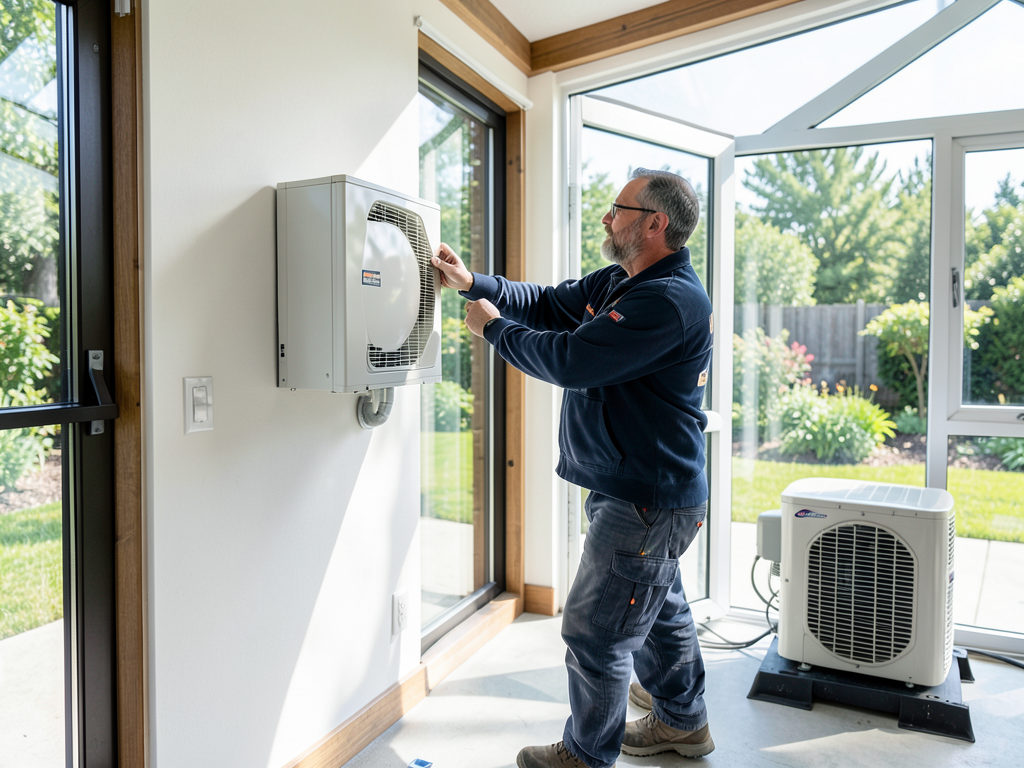
The beauty of mini-splits lies in their simplicity. Installation requires only a small three-inch hole for refrigerant lines and electrical connections. No ductwork means no major construction disruption to your existing home. Modern units offer SEER2 ratings up to 22 and HSPF2 ratings up to 12.5, providing excellent efficiency even during Granby’s coldest winter nights.
Most Granby homeowners choose 1.5 to 3-ton units depending on sunroom size. A typical 200-square-foot sunroom might need a 9000 BTU unit while larger spaces could require 18000 BTU or more. The exact sizing depends on your sunroom’s insulation quality and window configuration.
Cost considerations favor mini-splits for most additions. Installation typically runs $3500 to $7000 including equipment and labor. The system pays for itself through lower operating costs compared to extending existing ductwork or upgrading your whole-home system.
2. Extending Your Existing HVAC Ductwork
If your home already has central air conditioning and forced hot air heating extending the ductwork to your new sunroom might seem logical. This approach works best when your existing system has sufficient capacity and your home’s layout allows for relatively simple duct runs.
The key consideration is whether your current furnace and air handler can handle the additional load. A typical 80000 BTU furnace might struggle to heat an extra 400 square feet of poorly insulated sunroom during a January polar vortex. The system needs to maintain comfortable temperatures without running constantly or creating cold spots elsewhere in your home. Who to Call for Emergency Furnace Repair in Hartford in the Middle of the Night.
Extending ductwork requires careful planning around your home’s structure. You’ll need to route ducts through walls, floors, or ceilings while maintaining proper insulation and vapor barriers. In Granby’s older homes with plaster walls this can mean extensive demolition and reconstruction.
The cost varies dramatically based on complexity. Simple runs through unfinished basements might cost $2000 to $4000 while complex installations through finished spaces can exceed $8000. You’ll also need to factor in the cost of rebalancing your existing system to ensure proper airflow throughout your home.
3. Upgrading to a High-Capacity Whole-Home System
For homeowners planning multiple additions or major renovations upgrading your entire HVAC system might make sense. This approach involves replacing your existing furnace, air handler, and ductwork with higher-capacity equipment designed to handle your expanded living space.
This option provides the most seamless integration and can improve efficiency throughout your entire home. Modern high-efficiency systems with variable-speed blowers and smart thermostats offer precise temperature control and significant energy savings. You can also add zoning capabilities to independently control different areas of your home.. Read more about The Most Common Places Your Thermostat Should Never Be Installed in a North End Home.
However this represents the most expensive option. A complete system replacement for a typical Granby home runs $12000 to $25000 depending on equipment quality and home size. The payback period through energy savings alone can stretch to 7 to 10 years.
This approach makes sense if your existing system is over 15 years old, requires frequent repairs, or uses outdated technology like single-stage compressors. You’ll also need to factor in the disruption of replacing equipment and potentially modifying your home’s structure to accommodate new ductwork. EPA Section 608 certification.
Factors That Impact Your Choice in the Connecticut Climate
Granby’s location in the Connecticut River Valley creates specific HVAC challenges that affect your sunroom addition. Understanding these factors helps you make the right choice for year-round comfort.
Winter temperatures regularly drop below zero during arctic outbreaks. Your heating system needs to maintain comfortable temperatures even when outdoor conditions are extreme. Mini-splits with cold-climate heat pump technology can operate efficiently down to -15°F, but performance drops as temperatures fall below zero.
Summer humidity presents another challenge. Granby experiences relative humidity levels above 80% during July and August. Your cooling system needs strong dehumidification capabilities to prevent that sticky feeling and protect against mold growth in your new sunroom.
Sunroom construction creates additional heat gain through large windows and glass doors. South-facing additions can experience temperatures 20 to 30 degrees higher than the rest of your home on sunny winter days. Your HVAC system needs to handle these rapid temperature swings.
Insulation requirements under Connecticut’s energy code affect your HVAC sizing. New additions must meet R-49 attic insulation, R-20 wall insulation, and R-30 floor insulation standards. Better insulation reduces your heating and cooling loads, potentially allowing smaller HVAC equipment.
Do I Need a Permit for HVAC in a Hartford Home Addition?
Connecticut’s Uniform State Building Code requires permits for most HVAC modifications including sunroom additions. The Hartford Building Department enforces these requirements to ensure safety and energy efficiency. HVAC Hartford.
You’ll need a mechanical permit for any new HVAC equipment installation. This includes mini-splits, furnace replacements, or ductwork modifications. The permit process involves submitting detailed plans showing equipment locations, duct layouts, and electrical connections.
Energy code compliance is mandatory under Section 202 of the Connecticut State Building Code. Your HVAC contractor must perform a Manual J load calculation to properly size equipment. This calculation considers your sunroom’s orientation, insulation levels, window area, and local climate data for Hartford’s 06106 zip code area.
Refrigerant handling requires EPA Section 608 certification for all technicians. Connecticut also mandates specific practices for refrigerant recovery and recycling to protect the environment. Your contractor should provide documentation of proper licensing and insurance coverage.
Inspections occur at multiple stages. Rough inspections verify proper equipment installation before concealment. Final inspections ensure the system operates correctly and meets all code requirements. Work without permits can result in fines up to $500 per day and may complicate future home sales.
Cost Comparison: Extending Ductwork vs. Going Ductless
Understanding the true costs of each HVAC approach helps you make an informed decision for your Granby sunroom addition. Here’s how the options compare across different scenarios.
| System Type | Initial Cost | Installation Time | Operating Cost | Best For |
|---|---|---|---|---|
| Ductless Mini-Split | $3500-$7000 | 1-2 days | $250-$400/year | Most additions |
| Ductwork Extension | $2000-$8000 | 3-7 days | $300-$500/year | Existing capacity |
| Whole Home Upgrade | $12000-$25000 | 5-10 days | $200-$350/year | Major renovations |
Mini-splits offer the fastest installation with minimal disruption. A typical two-day installation involves mounting indoor units, running refrigerant lines through walls, and connecting the outdoor compressor. No ductwork means no demolition or reconstruction of finished spaces.
Ductwork extensions require more time and create more mess. Installers must cut into walls, run ducts through cavities, and ensure proper insulation. Complex installations through finished spaces might require multiple tradespeople including drywall contractors and painters.
Operating costs depend on equipment efficiency and local utility rates. Connecticut electricity averages 18 to 22 cents per kilowatt-hour. A high-efficiency mini-split might use 1500 watts while running, costing about 30 cents per hour. Less efficient systems use more power and cost more to operate.
Why a Manual J Load Calculation is Non-Negotiable
Proper HVAC sizing starts with a Manual J load calculation. This industry-standard procedure determines exactly how much heating and cooling your sunroom addition needs based on specific factors unique to your project.
The calculation considers your sunroom’s orientation relative to true north. A south-facing room in Granby receives significantly more solar heat gain than a north-facing one. Window size, glass type, and shading from trees or nearby structures all affect the heat load.
Insulation quality dramatically impacts sizing requirements. Connecticut’s energy code mandates specific R-values for new construction. A well-insulated sunroom might need half the heating capacity of a poorly insulated one of the same size. The calculation accounts for all insulation layers including walls, ceiling, floor, and windows.
Air infiltration rates matter more than many homeowners realize. New construction must meet specific air leakage requirements. A tight building envelope reduces heating and cooling loads but requires proper ventilation to maintain indoor air quality.
The calculation also considers internal heat gains from people, electronics, and lighting. A sunroom used as a home office with multiple computers generates more heat than one used occasionally for reading. These factors affect both heating and cooling requirements.
Professional contractors use specialized software to perform Manual J calculations. The process typically takes 1 to 2 hours and produces a detailed report showing heating and cooling loads in BTU per hour. This information ensures you install properly sized equipment that operates efficiently without short cycling or inadequate capacity.
Smart Technology Integration for Your New Sunroom
Modern HVAC systems offer smart technology features that enhance comfort and efficiency in your sunroom addition. These capabilities integrate with your home’s existing smart devices and provide convenient control options.
Wi-Fi enabled thermostats allow you to control your sunroom’s temperature from anywhere using your smartphone. You can adjust settings while away from home, monitor energy usage, and receive alerts about system performance. Many models learn your schedule and automatically adjust temperatures to save energy.
Voice control integration works with Amazon Alexa, Google Assistant, and Apple HomeKit. You can adjust temperatures, change fan speeds, or switch between heating and cooling modes using simple voice commands. This hands-free control proves especially convenient when entering the sunroom with your hands full.
Geofencing technology uses your smartphone’s location to automatically adjust temperatures based on your proximity to home. The system can begin cooling your sunroom before you arrive and switch to energy-saving mode when you leave, maximizing comfort while minimizing energy waste.
Smart zoning systems divide your home into independently controlled areas. Your sunroom can maintain its own temperature settings separate from the rest of your house. This prevents energy waste from overheating or overcooling unused spaces while ensuring your sunroom stays comfortable when in use.
Energy monitoring features track your HVAC system’s performance and energy consumption. You can identify patterns, spot potential problems early, and make informed decisions about temperature settings and usage patterns. Some systems provide detailed reports showing daily, weekly, and monthly energy usage.
Energy Efficiency and Rebate Opportunities
Connecticut offers several energy efficiency programs that can reduce the cost of your sunroom HVAC installation. Understanding these opportunities helps you maximize your investment while minimizing environmental impact.
Energize Connecticut provides rebates for high-efficiency HVAC equipment through the Home Energy Solutions program. Mini-split heat pumps with SEER2 ratings above 18 and HSPF2 ratings above 10 qualify for rebates of $300 to $500 per ton of cooling capacity. These rebates apply to both equipment and installation costs. Energize Connecticut.
The Connecticut Energy Efficiency Fund offers additional incentives for systems that exceed minimum efficiency standards. Equipment with advanced features like variable-speed compressors and smart thermostats may qualify for enhanced rebates. These programs change annually, so check current offerings before purchasing equipment.
Federal tax credits remain available for high-efficiency HVAC systems through 2026. The Energy Efficient Home Improvement Credit provides up to $2000 for qualified heat pumps and other efficient equipment. These credits reduce your tax liability dollar-for-dollar rather than providing a deduction.
Local utility companies offer their own rebate programs. Eversource and United Illuminating provide incentives for energy-efficient upgrades that reduce peak demand. These programs often have limited funding and operate on a first-come basis.
Beyond financial incentives, efficient systems reduce your carbon footprint and may increase your home’s value. Energy-efficient features appeal to environmentally conscious buyers and can differentiate your property in the competitive Granby real estate market.
Maintenance Requirements for Long-Term Performance
Proper maintenance ensures your sunroom HVAC system operates efficiently for its expected 15 to 20-year lifespan. Different system types require specific maintenance procedures to prevent problems and maintain performance.
Ductless mini-splits need regular filter cleaning to maintain airflow and efficiency. Most indoor units have washable filters that require cleaning every 2 to 3 months. Clogged filters reduce system capacity by up to 15% and force the compressor to work harder, increasing energy costs and wear.
Outdoor units require clearance around the condenser coil for proper airflow. Keep vegetation trimmed at least two feet from the unit and remove leaves and debris that accumulate on the coil. Annual professional cleaning removes dirt buildup that reduces efficiency and can cause premature failure.
Ducted systems need regular filter changes and duct cleaning every 3 to 5 years. Leaky ducts waste 20 to 30% of conditioned air in typical installations. Professional duct sealing improves efficiency and prevents dust and allergens from entering your sunroom through leaky connections.
Refrigerant levels require checking annually. Low refrigerant indicates leaks that reduce efficiency and can damage the compressor. Modern systems use environmentally friendly refrigerants, but leaks still harm performance and may violate environmental regulations.
Professional maintenance visits include checking electrical connections, lubricating moving parts, and testing system controls. These inspections catch developing problems before they cause breakdowns during extreme weather when you need heating or cooling most.
Indoor Air Quality Considerations
Your sunroom addition creates opportunities to improve your home’s indoor air quality. New construction allows you to incorporate features that address common air quality concerns while maintaining comfort.
Ultraviolet (UV) light systems installed in your HVAC equipment kill airborne bacteria, viruses, and mold spores. These systems work continuously to sanitize air as it passes through your equipment, reducing the spread of illness and preventing mold growth on cooling coils.
Whole-house air purifiers with HEPA filtration remove 99.97% of particles 0.3 microns and larger. These systems capture dust, pollen, pet dander, and other allergens that affect respiratory health. Advanced models also remove volatile organic compounds (VOCs) from household chemicals and furnishings.
Energy Recovery Ventilators (ERVs) provide fresh air exchange while recovering heating or cooling energy from exhaust air. These systems maintain healthy indoor air quality without the energy waste of opening windows. ERVs prove especially valuable in tightly sealed modern construction where natural air infiltration is minimal.
Humidity control prevents both excessive dryness in winter and excessive moisture in summer. Proper humidity levels between 30% and 50% improve comfort, protect wood furnishings from warping, and reduce static electricity. Some systems include built-in humidifiers and dehumidifiers for year-round control.
Carbon monoxide detectors should be installed in any room with fuel-burning appliances. Even electric sunrooms benefit from CO detection since the space connects to your home’s living areas. Combination smoke and CO detectors provide comprehensive safety protection.
Frequently Asked Questions
How long does it take to install HVAC in a sunroom addition?
Installation time varies by system type. Mini-splits typically install in 1-2 days while ductwork extensions take 3-7 days. Complex whole-home system upgrades may require 5-10 days including equipment replacement and modifications.
Can I install a mini-split myself to save money?
DIY installation is not recommended. Connecticut requires EPA Section 608 certification for refrigerant handling. Improper installation can void warranties, create safety hazards, and result in inefficient operation that costs more over time.
What size HVAC system do I need for a 200 square foot sunroom?
Size depends on insulation quality, window area, and orientation. A well-insulated 200 square foot sunroom might need 9000 BTU while a poorly insulated one could require 15000 BTU or more. A Manual J calculation provides exact sizing requirements.
Will extending my existing ductwork reduce efficiency in other rooms?
Adding ductwork without proper system rebalancing can reduce efficiency throughout your home. Your existing system may need adjustments to maintain proper airflow and temperature control in all areas after the addition.
How much do energy rebates actually save on HVAC installation?
Energize Connecticut rebates typically range from $300 to $500 per ton for high-efficiency equipment. Federal tax credits can provide up to $2000 in savings. Total savings vary but often reduce installation costs by 10-20%.
Ready to Make Your Sunroom Addition Comfortable Year-Round?
Choosing the right HVAC system for your Granby sunroom addition affects your comfort, energy bills, and home value for years to come. The decision involves balancing upfront costs against long-term efficiency, considering your home’s existing infrastructure, and understanding local climate requirements.
Don’t let your beautiful new sunroom become an uncomfortable space you avoid during extreme weather. Whether you choose the flexibility of a mini-split, the integration of extended ductwork, or the comprehensive solution of a whole-home upgrade, professional installation ensures optimal performance and efficiency.
Call (959) 203-9992 today to schedule your free consultation. Our NATE-certified technicians will evaluate your specific needs, perform a detailed Manual J load calculation, and recommend the most cost-effective solution for your Granby home. We handle everything from permits to final inspections, ensuring your new sunroom stays comfortable in every season.
Pick up the phone and call (959) 203-9992 before construction begins. The right HVAC planning now prevents expensive problems later and ensures your sunroom addition becomes the comfortable, year-round living space you’ve always wanted.
You may also find this helpful. Keeping Your Plainville Garage Workshop Comfortable in Every Season.
{
“@context”: “https://schema.org”,
“@type”: “BlogPosting”,
“headline”: “How to Properly Heat and Cool a New Sunroom Addition in Granby”,
“description”: “Learn the best HVAC options for your Granby sunroom addition. From mini-splits to ductwork extensions, discover cost-effective heating and cooling solutions for Connecticut weather.”,
“wordCount”: 2964,
“datePublished”: “2026-04-01T06:47:00.000Z”,
“dateModified”: “2026-04-01T06:47:00.000Z”,
“inLanguage”: “en-US”,
“mainEntityOfPage”: {
“@type”: “WebPage”,
“@id”: “https://libertyhvachartford.com”
},
“publisher”: {
“@type”: “LocalBusiness”,
“name”: “Liberty HVAC Hartford”,
“url”: “https://libertyhvachartford.com”
},
“author”: {
“@type”: “Organization”,
“name”: “Liberty HVAC Hartford”,
“url”: “https://libertyhvachartford.com”
},
“image”: {
“@type”: “ImageObject”,
“url”: “https://libertyhvachartford.com/wp-content/uploads/2026/03/how-to-properly-heat-and-cool-a-new-sunroom-additi-1.png”
}
}
{
“@context”: “https://schema.org”,
“@type”: “HVACBusiness”,
“name”: “Liberty HVAC Hartford”,
“url”: “https://libertyhvachartford.com”,
“address”: {
“@type”: “PostalAddress”,
“addressLocality”: “Hartford”
},
“areaServed”: {
“@type”: “City”,
“name”: “Hartford”
}
}
{
“@context”: “https://schema.org”,
“@type”: “FAQPage”,
“mainEntity”: [
{
“@type”: “Question”,
“name”: “Do I Need a Permit for HVAC in a Hartford Home Addition?”,
“acceptedAnswer”: {
“@type”: “Answer”,
“text”: “Connecticut’s Uniform State Building Code requires permits for most HVAC modifications including sunroom additions. The Hartford Building Department enforces these requirements to ensure safety and energy efficiency. HVAC Hartford.”
}
},
{
“@type”: “Question”,
“name”: “How long does it take to install HVAC in a sunroom addition?”,
“acceptedAnswer”: {
“@type”: “Answer”,
“text”: “Installation time varies by system type. Mini-splits typically install in 1-2 days while ductwork extensions take 3-7 days. Complex whole-home system upgrades may require 5-10 days including equipment replacement and modifications.”
}
},
{
“@type”: “Question”,
“name”: “Can I install a mini-split myself to save money?”,
“acceptedAnswer”: {
“@type”: “Answer”,
“text”: “DIY installation is not recommended. Connecticut requires EPA Section 608 certification for refrigerant handling. Improper installation can void warranties, create safety hazards, and result in inefficient operation that costs more over time.”
}
},
{
“@type”: “Question”,
“name”: “What size HVAC system do I need for a 200 square foot sunroom?”,
“acceptedAnswer”: {
“@type”: “Answer”,
“text”: “Size depends on insulation quality, window area, and orientation. A well-insulated 200 square foot sunroom might need 9000 BTU while a poorly insulated one could require 15000 BTU or more. A Manual J calculation provides exact sizing requirements.”
}
},
{
“@type”: “Question”,
“name”: “Will extending my existing ductwork reduce efficiency in other rooms?”,
“acceptedAnswer”: {
“@type”: “Answer”,
“text”: “Adding ductwork without proper system rebalancing can reduce efficiency throughout your home. Your existing system may need adjustments to maintain proper airflow and temperature control in all areas after the addition.”
}
},
{
“@type”: “Question”,
“name”: “How much do energy rebates actually save on HVAC installation?”,
“acceptedAnswer”: {
“@type”: “Answer”,
“text”: “Energize Connecticut rebates typically range from $300 to $500 per ton for high-efficiency equipment. Federal tax credits can provide up to $2000 in savings. Total savings vary but often reduce installation costs by 10-20%.”
}
},
{
“@type”: “Question”,
“name”: “Ready to Make Your Sunroom Addition Comfortable Year-Round?”,
“acceptedAnswer”: {
“@type”: “Answer”,
“text”: “Choosing the right HVAC system for your Granby sunroom addition affects your comfort, energy bills, and home value for years to come. The decision involves balancing upfront costs against long-term efficiency, considering your home’s existing infrastructure, and understanding local climate requirements.”
}
}
]
}
{
“@context”: “https://schema.org”,
“@type”: “BreadcrumbList”,
“itemListElement”: [
{
“@type”: “ListItem”,
“position”: 1,
“name”: “Home”,
“item”: “https://libertyhvachartford.com”
},
{
“@type”: “ListItem”,
“position”: 2,
“name”: “Blog”,
“item”: “https://libertyhvachartford.com/blog”
},
{
“@type”: “ListItem”,
“position”: 3,
“name”: “How to Properly Heat and Cool a New Sunroom Addition in Granby”
}
]
}
{
“@context”: “https://schema.org”,
“@type”: “Service”,
“serviceType”: “HVAC”,
“provider”: {
“@type”: “LocalBusiness”,
“name”: “Liberty HVAC Hartford”,
“url”: “https://libertyhvachartford.com”
},
“areaServed”: {
“@type”: “City”,
“name”: “Hartford”
},
“description”: “Learn the best HVAC options for your Granby sunroom addition. From mini-splits to ductwork extensions, discover cost-effective heating and cooling solutions for Connecticut weather.”
}