
How to Decide if a Tankless Water Heater is Worth the Switch in Your West End Home
Choosing between a traditional tank and a tankless water heater in West End Hartford means weighing space savings against performance in Connecticut’s cold winters. Tankless units heat water on demand cutting energy waste and freeing up basement space—but Hartford’s 40°F winter groundwater and hard water scale demand careful planning. This guide breaks down the local costs rebates and technical factors so you can decide if the switch makes sense for your home. The Best Energy Efficient Boilers for Hartford Homes with Old Radiators.
West End Hartford’s Water Heating Challenges
The West End’s mix of historic Victorians and early 20th-century homes often means cramped basements with old tank units taking up valuable space. Hartford’s groundwater drops to near freezing in January which reduces tankless GPM output by up to 30 percent compared to warmer climates. The region’s hard water—averaging 15 to 20 grains per gallon—accelerates mineral scaling inside tankless heat exchangers shortening lifespan without proper maintenance. HVAC Hartford.
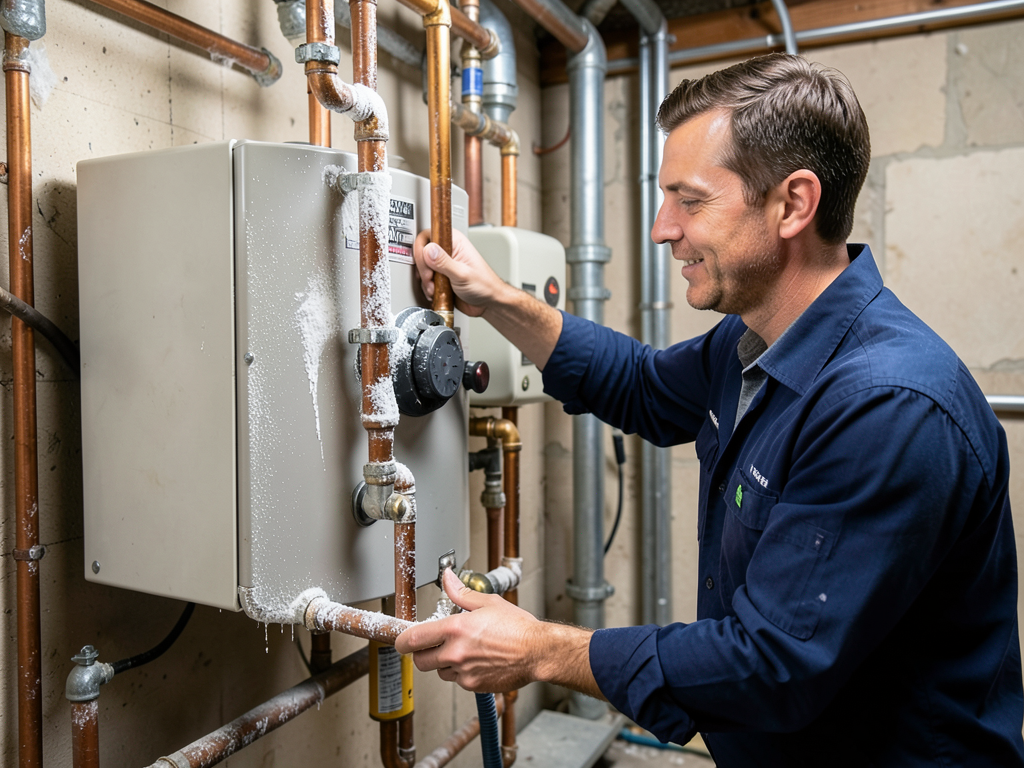
Image: Technician inspecting a tankless heat exchanger for scale buildup in a West End basement. Scale appears as white chalky deposits on copper tubing reducing efficiency. High Efficiency AC Options for Luxury Homes in Glastonbury.
Tank vs Tankless: Hartford Performance Comparison
| Feature | Traditional Tank | Tankless |
|---|---|---|
| Space Required | 5–10 sq ft floor space | Wall-mounted 2–4 sq ft |
| Winter GPM Output | Steady 3–5 GPM (preheated) | 2–4 GPM (groundwater dependent) |
| Lifespan | 8–12 years | 15–20 years (with descaling) |
| Annual Energy Use* | 4,500–5,000 kWh | 3,000–3,500 kWh |
*Based on Hartford utility rates and 60-gallon daily use
Cost Breakdown for West End Homes
A standard 50-gallon tank replacement in Hartford runs $1,200–1,500 installed. A tankless system costs $2,500–3,500 installed including gas line upgrades and venting changes common in older West End homes. Hartford’s average labor rate of $95 per hour adds $400–$600 for retrofitting work in tight basement spaces.
Local Rebates That Offset Costs
Energize CT offers up to $750 for qualifying tankless units with an Energy Factor of 0.87 or higher. Eversource and United Illuminating provide additional $100–$200 rebates for gas-fired models. These incentives reduce net installation cost to $1,150–$2,550—often less than a new tank when you factor in long-term energy savings. Energize CT water heating rebates.
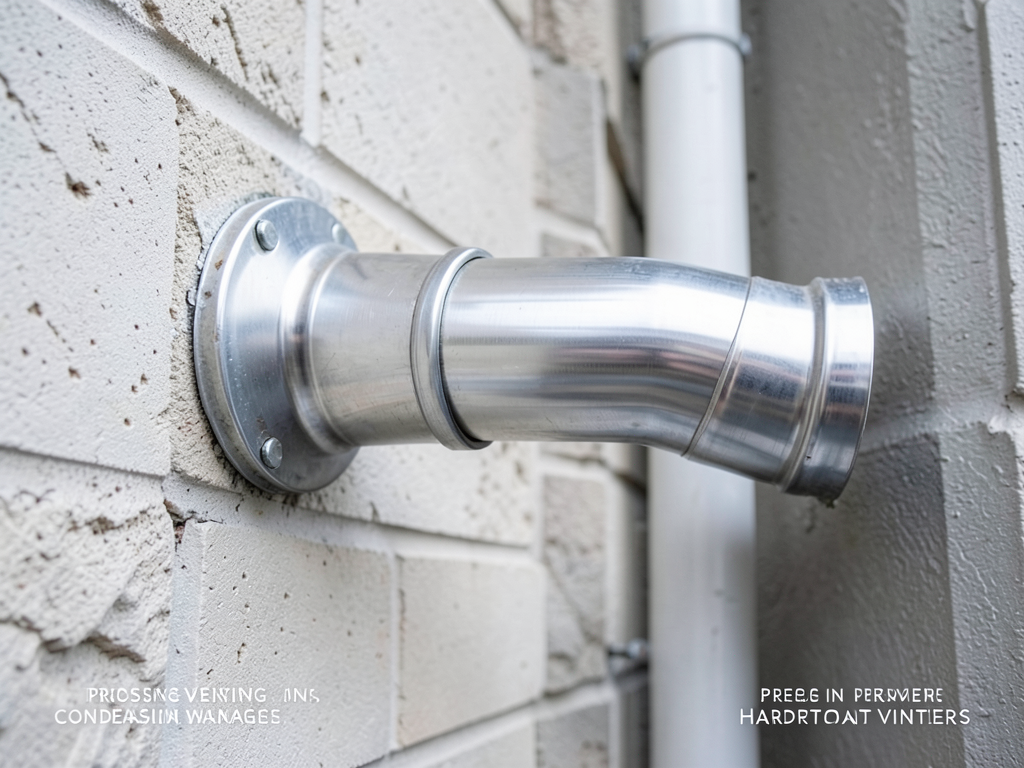
Image: Close-up of a condensing tankless unit’s stainless steel vent pipe routed through an exterior wall. Proper venting prevents condensation damage in Hartford winters.
Installation Requirements in Historic West End Homes
Older Hartford homes often need gas line upsizing from 1/2″ to 3/4″ to meet tankless BTU demands. Venting must use Category III stainless steel pipe per IMC Section 802.11 to handle acidic condensate. Many West End basements require an electrical outlet for the unit’s control board—a $200–$300 addition if none exists. IMC Section 802.11 venting requirements.
Water Hardness and Scale Prevention
Hartford’s water hardness means tankless units need annual vinegar flush descaling to maintain efficiency. Without it scale insulates the heat exchanger cutting output by 20 percent and risking premature failure. A $150–$200 professional descaling service pays for itself in avoided repairs and energy waste. Compressor Failure Repair.
Performance in Connecticut Winters
When groundwater hits 40°F a tankless unit’s flow rate drops noticeably. A model rated at 8 GPM at 70°F inlet may only deliver 5.5 GPM in January. For a West End family of four running two showers and a dishwasher simultaneously this can mean cooler showers or longer wait times. Proper unit sizing—often 199,000 BTU for whole-house service—keeps performance steady.
Is the Switch Worth It for Your Home?
If your tank is over 10 years old and you value space and efficiency the tankless upgrade can pay for itself in 5–7 years through energy savings and rebates. If your household uses under 40 gallons daily the payback extends to 8–10 years. For large families with high simultaneous demand a high-recovery tank may still make sense.
Step-by-Step Decision Checklist
- Measure Your Space
Confirm you have 2–4 sq ft of wall space near gas and venting exits.
- Check Water Hardness
Test your water or ask your utility for hardness data; over 10 gpg needs annual descaling.
- Calculate Peak GPM Need
Add flow rates of fixtures used at once; aim for a unit that covers your peak demand.
- Verify Venting and Gas Supply
Ensure your gas line and venting meet IMC code; older homes often need upgrades.
- Factor in Rebates
Apply Energize CT and utility rebates to your net cost calculation.
Call Liberty HVAC for a West End Assessment
Liberty HVAC has installed tankless systems in dozens of West End homes navigating Hartford’s hard water and historic building quirks. We size units for local winter performance and handle all venting and gas upgrades to code. Call (959) 203-9992 today to schedule your inspection and get a clear cost-benefit breakdown for your specific home.
Frequently Asked Questions
How long does a tankless water heater last in Hartford?
With annual descaling most tankless units last 15–20 years in Hartford’s hard water conditions. Neglecting maintenance can cut life to under 10 years due to scale buildup.
Can I install a tankless unit myself?
Connecticut plumbing code requires a licensed plumber for gas line and venting work. DIY installation risks code violations and safety hazards.
Will a tankless unit keep up during a polar vortex?
Properly sized units maintain flow but GPM drops with colder inlet water. Upsizing the BTU rating ensures adequate hot water even when groundwater nears freezing.
What maintenance does a tankless unit need?
Annual vinegar flush descaling is essential in Hartford’s hard water. Some units also need air filter cleaning and burner inspection every 2–3 years.
Are tankless units noisy?
Modern units operate at 40–50 dB, similar to a refrigerator hum. Loud noises usually indicate scale buildup or venting issues needing service.
Can I use a tankless unit with a well?
Yes, but well water with high mineral content may require more frequent descaling. A water softener can extend maintenance intervals.
Do tankless units work with radiant floor heating?
Many condensing tankless models support both domestic hot water and space heating loops, but system design must match boiler output and loop temperatures.
How much space will I save?
A tankless unit frees up 5–10 sq ft of floor space by replacing a 40–80-gallon tank, often enough for storage or equipment.
Is there a difference between condensing and non-condensing models?
Condensing units extract more heat from exhaust gases for higher efficiency (up to 98%) and are better suited for Hartford’s cold winters.
What happens if the power goes out?
Most gas tankless units need electricity for ignition and controls, so they shut off during outages. Battery backup systems are available for critical applications.
Image: Technician using a manometer to check gas pressure at a tankless water heater installation in a Hartford basement. Proper pressure ensures safe and efficient operation.
{
“@context”: “https://schema.org”,
“@type”: “BlogPosting”,
“headline”: “How to Decide if a Tankless Water Heater is Worth the Switch in Your West End Home”,
“description”: “Considering a tankless water heater in West End Hartford? Learn the real costs, local rebates, and performance factors specific to CT winters and Hartford water.”,
“wordCount”: 1139,
“datePublished”: “2026-06-04T15:07:00.000Z”,
“dateModified”: “2026-06-04T15:07:00.000Z”,
“inLanguage”: “en-US”,
“mainEntityOfPage”: {
“@type”: “WebPage”,
“@id”: “https://libertyhvachartford.com”
},
“publisher”: {
“@type”: “LocalBusiness”,
“name”: “Liberty HVAC Hartford”,
“url”: “https://libertyhvachartford.com”
},
“author”: {
“@type”: “Organization”,
“name”: “Liberty HVAC Hartford”,
“url”: “https://libertyhvachartford.com”
},
“image”: {
“@type”: “ImageObject”,
“url”: “https://libertyhvachartford.com/wp-content/uploads/2026/03/how-to-decide-if-a-tankless-water-heater-is-worth-1.png”
}
}
{
“@context”: “https://schema.org”,
“@type”: “HVACBusiness”,
“name”: “Liberty HVAC Hartford”,
“url”: “https://libertyhvachartford.com”,
“address”: {
“@type”: “PostalAddress”,
“addressLocality”: “Hartford”
},
“areaServed”: {
“@type”: “City”,
“name”: “Hartford”
}
}
{
“@context”: “https://schema.org”,
“@type”: “FAQPage”,
“mainEntity”: [
{
“@type”: “Question”,
“name”: “Is the Switch Worth It for Your Home?”,
“acceptedAnswer”: {
“@type”: “Answer”,
“text”: “If your tank is over 10 years old and you value space and efficiency the tankless upgrade can pay for itself in 5–7 years through energy savings and rebates. If your household uses under 40 gallons daily the payback extends to 8–10 years. For large families with high simultaneous demand a high-recovery tank may still make sense.”
}
},
{
“@type”: “Question”,
“name”: “How long does a tankless water heater last in Hartford?”,
“acceptedAnswer”: {
“@type”: “Answer”,
“text”: “With annual descaling most tankless units last 15–20 years in Hartford’s hard water conditions. Neglecting maintenance can cut life to under 10 years due to scale buildup.”
}
},
{
“@type”: “Question”,
“name”: “Can I install a tankless unit myself?”,
“acceptedAnswer”: {
“@type”: “Answer”,
“text”: “Connecticut plumbing code requires a licensed plumber for gas line and venting work. DIY installation risks code violations and safety hazards.”
}
},
{
“@type”: “Question”,
“name”: “Will a tankless unit keep up during a polar vortex?”,
“acceptedAnswer”: {
“@type”: “Answer”,
“text”: “Properly sized units maintain flow but GPM drops with colder inlet water. Upsizing the BTU rating ensures adequate hot water even when groundwater nears freezing.”
}
},
{
“@type”: “Question”,
“name”: “What maintenance does a tankless unit need?”,
“acceptedAnswer”: {
“@type”: “Answer”,
“text”: “Annual vinegar flush descaling is essential in Hartford’s hard water. Some units also need air filter cleaning and burner inspection every 2–3 years.”
}
},
{
“@type”: “Question”,
“name”: “Are tankless units noisy?”,
“acceptedAnswer”: {
“@type”: “Answer”,
“text”: “Modern units operate at 40–50 dB, similar to a refrigerator hum. Loud noises usually indicate scale buildup or venting issues needing service.”
}
},
{
“@type”: “Question”,
“name”: “Can I use a tankless unit with a well?”,
“acceptedAnswer”: {
“@type”: “Answer”,
“text”: “Yes, but well water with high mineral content may require more frequent descaling. A water softener can extend maintenance intervals.”
}
},
{
“@type”: “Question”,
“name”: “Do tankless units work with radiant floor heating?”,
“acceptedAnswer”: {
“@type”: “Answer”,
“text”: “Many condensing tankless models support both domestic hot water and space heating loops, but system design must match boiler output and loop temperatures.”
}
},
{
“@type”: “Question”,
“name”: “How much space will I save?”,
“acceptedAnswer”: {
“@type”: “Answer”,
“text”: “A tankless unit frees up 5–10 sq ft of floor space by replacing a 40–80-gallon tank, often enough for storage or equipment.”
}
},
{
“@type”: “Question”,
“name”: “Is there a difference between condensing and non-condensing models?”,
“acceptedAnswer”: {
“@type”: “Answer”,
“text”: “Condensing units extract more heat from exhaust gases for higher efficiency (up to 98%) and are better suited for Hartford’s cold winters.”
}
},
{
“@type”: “Question”,
“name”: “What happens if the power goes out?”,
“acceptedAnswer”: {
“@type”: “Answer”,
“text”: “Most gas tankless units need electricity for ignition and controls, so they shut off during outages. Battery backup systems are available for critical applications.”
}
}
]
}
{
“@context”: “https://schema.org”,
“@type”: “HowTo”,
“name”: “How to Decide on Tankless”,
“step”: [
{
“@type”: “HowToStep”,
“position”: 1,
“name”: “Measure Your Space”,
“text”: “Confirm you have 2–4 sq ft of wall space near gas and venting exits.”
},
{
“@type”: “HowToStep”,
“position”: 2,
“name”: “Check Water Hardness”,
“text”: “Test your water or ask your utility for hardness data; over 10 gpg needs annual descaling.”
},
{
“@type”: “HowToStep”,
“position”: 3,
“name”: “Calculate Peak GPM Need”,
“text”: “Add flow rates of fixtures used at once; aim for a unit that covers your peak demand.”
},
{
“@type”: “HowToStep”,
“position”: 4,
“name”: “Verify Venting and Gas Supply”,
“text”: “Ensure your gas line and venting meet IMC code; older homes often need upgrades.”
},
{
“@type”: “HowToStep”,
“position”: 5,
“name”: “Factor in Rebates”,
“text”: “Apply Energize CT and utility rebates to your net cost calculation.”
}
],
“image”: “https://libertyhvachartford.com/wp-content/uploads/2026/03/how-to-decide-if-a-tankless-water-heater-is-worth-1.png”
}
{
“@context”: “https://schema.org”,
“@type”: “BreadcrumbList”,
“itemListElement”: [
{
“@type”: “ListItem”,
“position”: 1,
“name”: “Home”,
“item”: “https://libertyhvachartford.com”
},
{
“@type”: “ListItem”,
“position”: 2,
“name”: “Blog”,
“item”: “https://libertyhvachartford.com/blog”
},
{
“@type”: “ListItem”,
“position”: 3,
“name”: “How to Decide if a Tankless Water Heater is Worth the Switch in Your West End Home”
}
]
}
{
“@context”: “https://schema.org”,
“@type”: “Service”,
“serviceType”: “HVAC”,
“provider”: {
“@type”: “LocalBusiness”,
“name”: “Liberty HVAC Hartford”,
“url”: “https://libertyhvachartford.com”
},
“areaServed”: {
“@type”: “City”,
“name”: “Hartford”
},
“description”: “Considering a tankless water heater in West End Hartford? Learn the real costs, local rebates, and performance factors specific to CT winters and Hartford water.”
}