
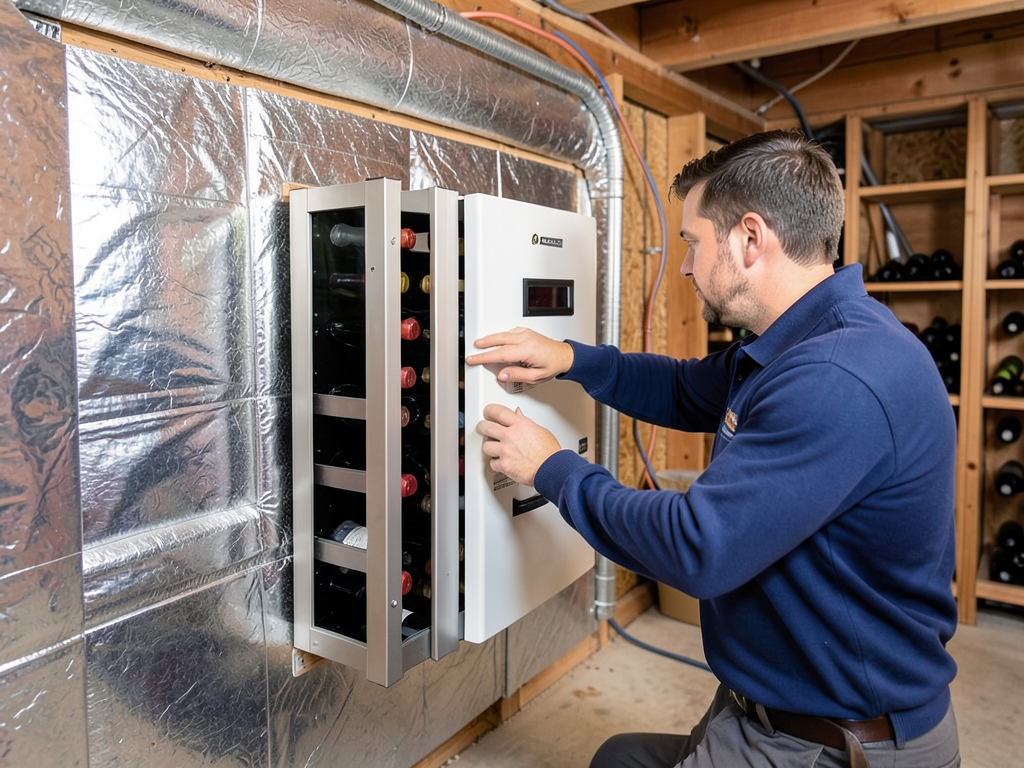
Why Standard Air Conditioning Isn’t Enough for Your High End Wine Cellar in Avon
Your wine collection deserves better than a standard air conditioner. While your home’s AC keeps you comfortable at 72°F, your wine requires a completely different environment to age properly. Standard cooling systems simply cannot maintain the precise temperature and humidity levels that premium wines need to develop their full character over time.. Read more about Keeping Your Luxury Car Collection at the Right Temperature in Your Farmington Garage.
Wine cellars in Avon face unique challenges. The humid continental climate of Connecticut means summer humidity often exceeds 80%, while winter air becomes bone-dry. This seasonal swing wreaks havoc on wine storage. Standard AC units pull moisture from the air, dropping humidity levels below 30% and causing corks to dry out and crack. The result? Oxidized wine and thousands of dollars in spoiled collections.
Liberty HVAC understands these challenges because we’ve installed and maintained wine cellar cooling systems throughout the Farmington Valley for over 15 years. We know that successful wine storage requires maintaining 55°F with 50-70% relative humidity year-round. This isn’t just about temperature—it’s about creating a stable microclimate that protects your investment.
The Science Behind Wine Cellar Cooling
Wine is alive. The compounds in wine continue to evolve and interact with oxygen through the cork over years or decades. This aging process requires absolute environmental stability. Temperature fluctuations of even 5 degrees cause wine to expand and contract, pushing air through the cork and accelerating oxidation.
Humidity control proves equally critical. When relative humidity drops below 50%, corks begin to shrink and crack. This allows air to seep into the bottle, ruining the wine. Conversely, humidity above 70% promotes mold growth on labels and can damage wooden racking systems. Standard AC systems cannot maintain this narrow humidity band.
The thermal load calculation for a wine cellar differs dramatically from residential cooling. Wine bottles act as thermal mass, absorbing and releasing heat slowly. This means the cooling system must run continuously at low capacity rather than cycling on and off. Standard AC units are designed for short, high-capacity cycles—exactly the wrong approach for wine storage.
Types of Wine Cooling Systems We Install
Choosing the right system depends on your cellar’s size, location, and construction. Here’s how the main options compare: High Efficiency AC Options for Luxury Homes in Glastonbury.
| System Type | Best For | Installation Complexity | Noise Level |
|---|---|---|---|
| Through-the-Wall Units | Small cellars up to 300 bottles | Simple, single penetration | 40-45 dB |
| Split Systems | Medium cellars up to 1,000 bottles | Moderate, requires refrigerant lines | 35-40 dB |
| Ducted Systems | Large cellars or multi-room setups | Complex, requires ductwork | 30-35 dB |
Through-the-wall units work well for small collections in finished basements. These self-contained systems mount through an exterior wall and vent heat directly outside. They’re cost-effective but limited in capacity and can be slightly noisier than other options.
Split systems separate the evaporator and condensing units. The quiet evaporator mounts inside your cellar while the noisier condenser stays outside. This configuration handles larger collections and provides better temperature stability. The refrigerant lines run through small penetrations in your foundation or walls. EPA Section 608 Certification.
Ducted systems offer the quietest operation and can serve multiple temperature zones. These work best for large collections or when the cellar sits within living space. The evaporator mounts remotely, often in an adjacent mechanical room, with conditioned air delivered through insulated ducts.
Our Process: Thermal Load Calculations & Vapor Barriers
Every successful wine cellar installation starts with precise calculations. We measure your cellar’s dimensions, assess insulation levels, and evaluate heat sources like lighting and equipment. A typical 200-bottle cellar in Avon might require 4,000-6,000 BTU of cooling capacity, but this varies based on construction and exposure.
Connecticut building codes require specific insulation standards for climate-controlled spaces. We typically install R-19 insulation in walls and R-30 in ceilings. For basements, we add a vapor barrier to prevent moisture migration through concrete walls. This barrier prevents condensation that could damage bottles and labels.
The installation process follows these critical steps:
- Site Assessment
We evaluate your space, measure thermal loads, and identify potential challenges like moisture intrusion or inadequate insulation.
- System Selection
Based on your collection size and space constraints, we recommend the optimal cooling configuration.
- Permit Acquisition
We handle all necessary Hartford County permits and ensure compliance with IMC Section 1105 for refrigeration systems. HVAC Hartford.
- Installation
Our technicians install the system, vapor barriers, and insulation according to manufacturer specifications.
- Commissioning
We calibrate the system, verify temperature and humidity levels, and train you on operation.
Proper vapor barrier installation prevents the most common wine cellar failure. Without it, warm, moist air from your basement migrates through cold cellar walls, causing condensation. This creates the perfect environment for mold growth and can damage expensive wooden racking systems. Compressor Failure Repair.
Serving Hartford and Surrounding Areas
Liberty HVAC serves wine collectors throughout Hartford County, including Avon, Farmington, Simsbury, and West Hartford. We understand the specific challenges of maintaining wine collections in Connecticut’s climate. Our technicians live and work in these communities, giving us firsthand knowledge of local building practices and climate patterns.
Avon’s historic homes often present unique challenges. Many feature stone foundations or fieldstone basements that require specialized sealing techniques. The area’s high water table means we must pay extra attention to moisture management during installation.
We’ve installed systems in diverse settings, from modern additions in Glastonbury to retrofitted cellars in historic Farmington homes. Each project requires adapting our approach to the specific building characteristics and the collector’s needs.
Frequently Asked Questions About Wine Storage in CT
What temperature should my wine cellar maintain?
55°F provides the ideal storage temperature for most wines. This temperature slows chemical reactions while preventing the expansion and contraction that damages corks. Some collectors prefer 52-54°F for long-term storage of particularly valuable bottles.
How important is humidity control?
Critical. Relative humidity between 50-70% prevents cork shrinkage and mold growth. Standard AC systems cannot maintain this range, which is why specialized wine cooling units include integrated humidity control.
Can I use my existing AC system?
No. Standard AC systems are designed to cool living spaces to 72-75°F while removing moisture. They cannot maintain the 55°F temperature or proper humidity levels that wine requires. Using your home’s AC will eventually ruin your collection.
How long do wine cooling systems last?
Quality wine cooling systems typically last 8-12 years with proper maintenance. The compressor and fan motors are the most common failure points. Regular maintenance can extend system life and prevent costly emergency repairs. Who to Call for Emergency Furnace Repair in Hartford in the Middle of the Night.
Maintenance and Emergency Services
Wine at risk requires immediate attention. We offer 24/7 emergency service throughout Hartford County because temperature excursions can destroy thousands of dollars in wine within hours. Our technicians carry common replacement parts and can often restore cooling within hours of your call.
Preventative maintenance prevents most emergencies. We recommend annual service that includes:
- Cleaning evaporator and condenser coils
- Checking refrigerant levels and pressures
- Inspecting electrical connections and controls
- Verifying temperature and humidity accuracy
- Cleaning or replacing air filters
During Connecticut’s humid summers, condensate drains can clog, causing water damage. We inspect these drains during maintenance visits and clean them to prevent overflow. This simple step prevents the most common cause of wine cellar water damage.
Power outages pose another risk. While modern wine cooling systems restart automatically, they can take hours to return to setpoint. We recommend battery backup systems for collections over 500 bottles or for irreplaceable bottles.
Energy Efficiency and Operating Costs
Wine cooling systems run continuously, making efficiency crucial for operating costs. Modern units achieve SEER ratings of 13-16, significantly reducing electricity consumption compared to older models. In Connecticut’s power grid, operating a typical 200-bottle cellar costs $30-45 monthly.
Insulation quality dramatically impacts efficiency. Poor insulation forces the system to work harder, increasing both energy costs and wear. We use thermal imaging cameras to identify insulation gaps during installation, ensuring optimal performance. The Best Energy Efficient Boilers for Hartford Homes with Old Radiators.
Smart thermostats provide additional savings by optimizing operation based on external conditions. These systems can reduce energy consumption by 15-20% while maintaining perfect storage conditions.
Connecticut’s energy efficiency programs sometimes offer rebates for high-efficiency cooling equipment. We stay current on these programs and can help you qualify for available incentives.
Why Choose Liberty HVAC
We’re not just HVAC technicians—we’re wine collectors who understand what’s at stake. Our lead technician has maintained wine cellars throughout the Farmington Valley for over 15 years. We’ve seen the consequences of improper installation and the value of precision engineering.
Our process includes detailed documentation of every installation. We provide you with system specifications, maintenance schedules, and emergency contact procedures. This documentation proves invaluable when troubleshooting issues or planning upgrades.
We stand behind our work with comprehensive warranties on both equipment and labor. Our installations meet or exceed all applicable building codes, including IMC Section 1105 for refrigeration systems and NEC Article 440 for air conditioning and refrigeration equipment.
Don’t trust your wine collection to a standard AC contractor. Wine storage requires specialized knowledge of thermodynamics, psychrometrics, and building science. We bring all this expertise to every installation, ensuring your collection ages perfectly for decades to come.
Ready to protect your wine investment? Call (959) 203-9992 today to schedule your consultation. We’ll assess your space, recommend the ideal system, and provide a detailed proposal with no pressure or obligation. Your wine deserves the best—give us a call and let’s discuss your cellar’s specific needs.
Don’t wait until temperature problems damage your collection. Pick up the phone and call (959) 203-9992 before the next heat wave hits. Your wine is counting on you to make the right call. For more information, visit International Mechanical Code.
{
“@context”: “https://schema.org”,
“@type”: “BlogPosting”,
“headline”: “Why Standard Air Conditioning Isn’t Enough for Your High End Wine Cellar in Avon”,
“description”: “Standard AC can’t maintain the 55°F and 50-70% humidity your wine cellar needs. Learn why Hartford-area collectors trust Liberty HVAC for precision cooling.”,
“wordCount”: 1621,
“datePublished”: “2026-04-28T08:11:00.000Z”,
“dateModified”: “2026-04-28T08:11:00.000Z”,
“inLanguage”: “en-US”,
“mainEntityOfPage”: {
“@type”: “WebPage”,
“@id”: “https://libertyhvachartford.com”
},
“publisher”: {
“@type”: “LocalBusiness”,
“name”: “Liberty HVAC Hartford”,
“url”: “https://libertyhvachartford.com”
},
“author”: {
“@type”: “Organization”,
“name”: “Liberty HVAC Hartford”,
“url”: “https://libertyhvachartford.com”
},
“image”: {
“@type”: “ImageObject”,
“url”: “https://libertyhvachartford.com/wp-content/uploads/2026/03/why-standard-air-conditioning-isn-t-enough-for-you-1.png”
}
}
{
“@context”: “https://schema.org”,
“@type”: “HVACBusiness”,
“name”: “Liberty HVAC Hartford”,
“url”: “https://libertyhvachartford.com”,
“address”: {
“@type”: “PostalAddress”,
“addressLocality”: “Hartford”
},
“areaServed”: {
“@type”: “City”,
“name”: “Hartford”
}
}
{
“@context”: “https://schema.org”,
“@type”: “FAQPage”,
“mainEntity”: [
{
“@type”: “Question”,
“name”: “What temperature should my wine cellar maintain?”,
“acceptedAnswer”: {
“@type”: “Answer”,
“text”: “55°F provides the ideal storage temperature for most wines. This temperature slows chemical reactions while preventing the expansion and contraction that damages corks. Some collectors prefer 52-54°F for long-term storage of particularly valuable bottles.”
}
},
{
“@type”: “Question”,
“name”: “How important is humidity control?”,
“acceptedAnswer”: {
“@type”: “Answer”,
“text”: “Critical. Relative humidity between 50-70% prevents cork shrinkage and mold growth. Standard AC systems cannot maintain this range, which is why specialized wine cooling units include integrated humidity control.”
}
},
{
“@type”: “Question”,
“name”: “Can I use my existing AC system?”,
“acceptedAnswer”: {
“@type”: “Answer”,
“text”: “No. Standard AC systems are designed to cool living spaces to 72-75°F while removing moisture. They cannot maintain the 55°F temperature or proper humidity levels that wine requires. Using your home’s AC will eventually ruin your collection.”
}
},
{
“@type”: “Question”,
“name”: “How long do wine cooling systems last?”,
“acceptedAnswer”: {
“@type”: “Answer”,
“text”: “Quality wine cooling systems typically last 8-12 years with proper maintenance. The compressor and fan motors are the most common failure points. Regular maintenance can extend system life and prevent costly emergency repairs. Who to Call for Emergency Furnace Repair in Hartford in the Middle of the Night.”
}
}
]
}
{
“@context”: “https://schema.org”,
“@type”: “HowTo”,
“name”: “Wine Cellar Cooling Installation”,
“step”: [
{
“@type”: “HowToStep”,
“position”: 1,
“name”: “Site Assessment”,
“text”: “We evaluate your space, measure thermal loads, and identify potential challenges like moisture intrusion or inadequate insulation.”
},
{
“@type”: “HowToStep”,
“position”: 2,
“name”: “System Selection”,
“text”: “Based on your collection size and space constraints, we recommend the optimal cooling configuration.”
},
{
“@type”: “HowToStep”,
“position”: 3,
“name”: “Permit Acquisition”,
“text”: “We handle all necessary Hartford County permits and ensure compliance with IMC Section 1105 for refrigeration systems. HVAC Hartford.”
},
{
“@type”: “HowToStep”,
“position”: 4,
“name”: “Installation”,
“text”: “Our technicians install the system, vapor barriers, and insulation according to manufacturer specifications.”
},
{
“@type”: “HowToStep”,
“position”: 5,
“name”: “Commissioning”,
“text”: “We calibrate the system, verify temperature and humidity levels, and train you on operation.”
}
],
“image”: “https://libertyhvachartford.com/wp-content/uploads/2026/03/why-standard-air-conditioning-isn-t-enough-for-you-1.png”
}
{
“@context”: “https://schema.org”,
“@type”: “BreadcrumbList”,
“itemListElement”: [
{
“@type”: “ListItem”,
“position”: 1,
“name”: “Home”,
“item”: “https://libertyhvachartford.com”
},
{
“@type”: “ListItem”,
“position”: 2,
“name”: “Blog”,
“item”: “https://libertyhvachartford.com/blog”
},
{
“@type”: “ListItem”,
“position”: 3,
“name”: “Why Standard Air Conditioning Isn’t Enough for Your High End Wine Cellar in Avon”
}
]
}
{
“@context”: “https://schema.org”,
“@type”: “Service”,
“serviceType”: “HVAC”,
“provider”: {
“@type”: “LocalBusiness”,
“name”: “Liberty HVAC Hartford”,
“url”: “https://libertyhvachartford.com”
},
“areaServed”: {
“@type”: “City”,
“name”: “Hartford”
},
“description”: “Standard AC can’t maintain the 55°F and 50-70% humidity your wine cellar needs. Learn why Hartford-area collectors trust Liberty HVAC for precision cooling.”
}